Category Archives: Learning

Get excited about programming with EU Code Week! 

“EU Code Week is a grass-roots movement that celebrates creativity, problem solving and collaboration through programming and other tech activities. The idea is to make programming more visible, to show young, adults and elderly how you bring ideas to life with code, to demystify these skills and bring motivated people together to learn.” https://codeweek.eu/about 

The Innokas network, together with the Finnish National Agency for Education, challenged teachers, schools and educational institutions to get excited about programming and computational thinking in Finland! We hosted exciting and versatile distance learning lessons for students of different ages, from preschool to middle school. Schools were also invited to organize their own coding event with their students and to add their event to the EUCodeWeek.eu -page.  

In October 2023, nearly 15000 students and their teachers registered to participate in nine distance lessons with the topics ranging from coding games, to programming without devices, to artificial intelligence. It was truly an engaging and innovative way to get excited about programming and learn together! 

On the EU’s Code Week website, you can find tips, materials and courses for implementing events, as well as the English-language social media channels maintained by the European Commission, where you can follow the activities of the code week throughout the year. 

Erasmus 3T – Collaborating in Bedford 


This time teachers and school developers from Denmark and Finland gathered in Bedford for a week in October. The week was full of different school visits, great conversations about the English educational system and observation of the three T’s (time, talent and technology (and trust)).  

IMG_20181102_145927_996

Our visit to England started with a reunion in a local restaurant. After a fun evening together it was time to start the activities. On the first day we had a chance to visit the University of Bedfordshire. It was very interesting to hear about the English school system. We spent the next days in different schools where participants got to know the school, observe lessons and even teach microlessons. The last day of the week provided again an opportunity for each delegation to present their thoughts and reflections to each other and discuss together.  

When discussing technology we found similar things that came up in both Finnish and Danish reflections. For us technology education in England seems like a separate entity from other education. This led to discussions about how to integrate technology in schools in order that it would be helpful and useful in pedagogical way.  

Reflections on talent included discussions on grouping of pupils and ranking. One big topic was also trust. We noticed that headmasters trust their teachers but the lack of trust is evident from the government’s side and that leads to ongoing testing and registrations.  

In a time perspective we talked about structured lessons and classrooms. Everything seemed to be very structured and that was one thing that was different from Finnish schools where we don’t have strict schedules and pupils may have just one or two tasks per lesson. Overall our visit to Bedford was great and we learned a lot about the English perspective to education and at the same time gained new insight into our own system. 

Asta Ansolahti and Kati Sormunen / The Innokas Network 
 

Innokas-Network’s robotics tournament

fynd_banneri_logo3.png

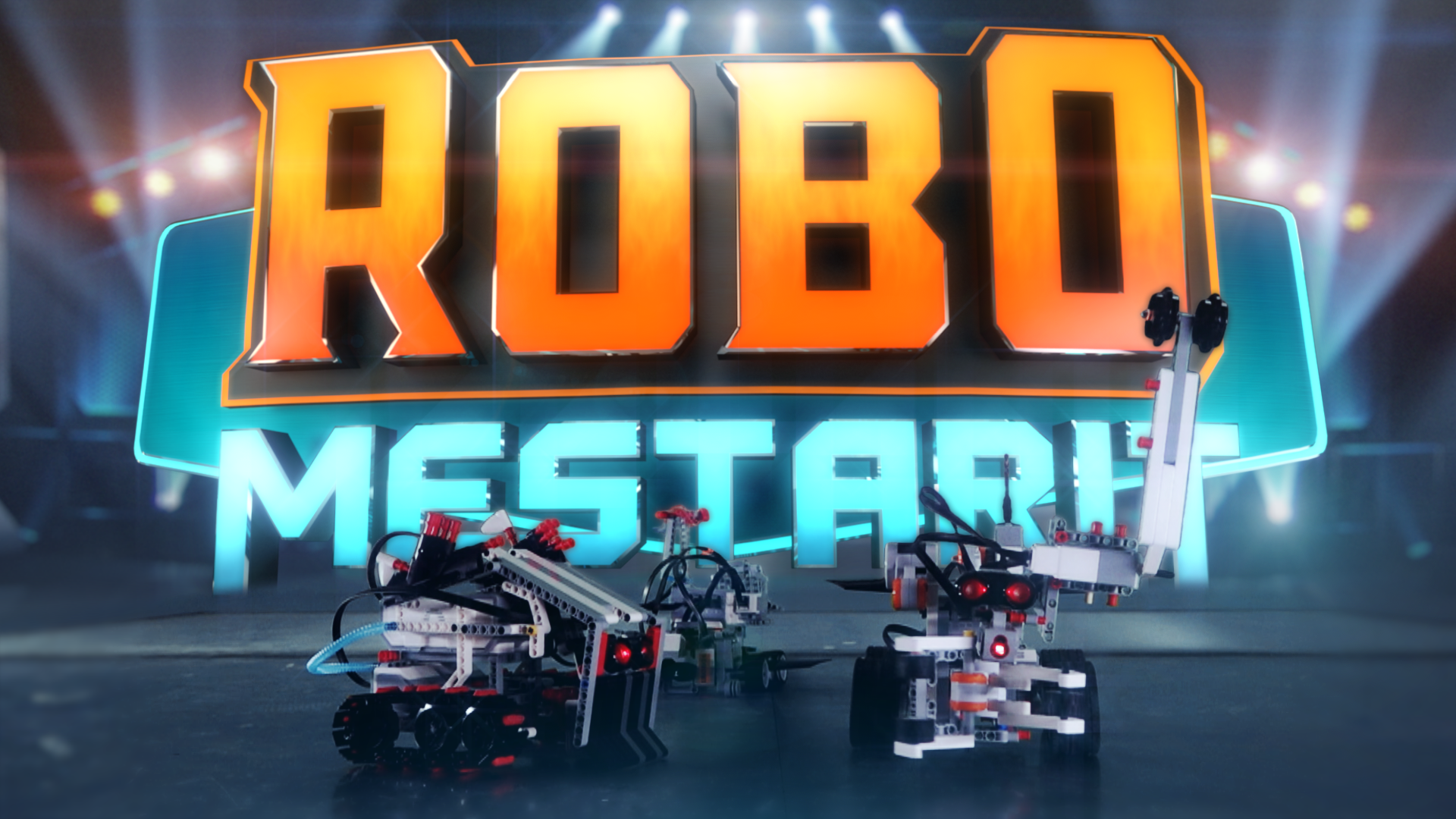
Since the beginning of April YLE has broadcasted a tv-show called Robomestarit. It airs every Sunday morning. It is a production based on the idea of a robotics tournament designed by Innokas-network. It aims to present robotics and coding while also showing what they make possible. At the same time the show is both entertaining and pedagogical.

Last weekend we got to see the finals of X-Sumo and Rescue and who won the competitions. The last episode of the show will be aired next Sunday. For both Freestyle and Dancing with robot it is time for the finals!

Yle/ Rami Pohjalahti.

The different competition tracks of Robomestarit are based on Innokas-Network’s robotics tournament which is held every year in different cities. This year it takes place in Tampere, 14th to 16th of May. The tracks are Pelastus (Rescue), X-Sumo, Tanssii robotin kanssa (Dancing with a robot) and Freestyle. The last mentioned has three teams competing in different challenges every week. . The winner is announced in the last episode.  Dancing with the robot is a different kind of track. If you want to win you need to do it on social media and get the most votes. X-Sumo works as a cup where two teams put their robots to the test of strength in robo sumo-wrestling and winner continues in the race. Rescue track puts the robots in different kind of situations where their mission is to transport a fuel tank to the space ship.

13-1-4292595-1525605721965.jpg

The teams taking part come from all over Finland. Most of the participants are 5th or 6th graders but there are some exceptions. Many of the teams have won their regional preliminary competitions and this is their final step.

Every episode lasts about half an hour. Naturally most of it is about the competitions but there is also much more to see and learn. One of the show’s presenter, Innokas-Network’s educator Juho Kemell has visited different kind of working environments that have robots. Those visits are an educational peek to the importance that robotics have in problem solving. While of course it is interesting to just watch the show the viewers also get to take part through social media and open challenges. Best viewer challenge participants get their videos shown in the program. Every episode has also an educational part, the ABC of coding. It teaches the very basics of coding and getting more into detail every episode. Don’t forget to check out their YouTube channel with interesting extra content.

ROBOMESTARIT-still-intro_00497

More info: http://yle.fi/robomestarit

In YLE areena: https://areena.yle.fi/1-4356057

Robomestarit in Youtube: https://www.youtube.com/channel/UChM3KcavvF7O48aEn9a_diQ/featured

(All the pictures are property of YLE)

Visiting the filming of Robomestarit!

At the YLE (Finnish National Broadcasting company) studio in Tampere adults and kids are moving smoothly between the lobby, dressing room and studio. The filming of the Robomestarit tv-show has started. The day starts when the presenters and the teams arrive. Last minute corrections are made to the outfits and people are getting familiar with the studio. The children seem really excited in their cool custom-made outfits and the atmosphere is electric. The schedule shows minute by minute what is going to happen during long day which ends in the filming of the actual episode. In addition to the filming in the studio, the day also consists of group and individual interviews.

The teams have a strict daily schedule. Participants go to make-up like any other TV stars. There is a lot of waiting and many children have travelled a long way to be here. Still everybody thinks it’s surely worth it. When following the filming of the interviews it is great to hear the young participants speak about their teams and how the skills they are practicing will help them in the future. In the middle of a relaxed chat with the children one of the director comes and takes them back to the studio. The face shots need to be retaken. Here we go again…

One of the presenters of Robomestarit, Juho Kemell, works as an educator in The Innokas Network. He has arrived early in the morning to get ready for the day’s filming. -“It has been quite a hassle which means it will be a great day!” Some material has been filmed before today. Juho and the crew have been visiting different kinds of companies during the last couple of months and observed different robots used in various industries. The judges are also preparing for the day and going through the most important rules regarding the upcoming contests. -“It is an awesome show!” says Erkki Hautala, an X-sumo judge and Innokas Network’s educator while guiding the teams to test and prepare their robots.

Yle/ Rami Pohjalahti.


Melissa Kaivo, known to children from the TV-show Galaxi, is also a part of the production. She is one of the presenters and a travelling journalist who visits the teams’ schools. She thinks that the live-aspect of the show is very exciting. Not everything is filmed beforehand thus letting all of the viewers, teams and presenters really live through the show throughout the spring while the show airs. She also thinks it is cool that the viewers get to influence and take part in the program through social media.

The fog machines are blowing in the studio and the atmosphere is almost too impatient. The audience, teams and the presenters are ready. Lights, cameras, applause! What happens after this can be seen on YLE channels or YLE-areena.

The Innokas Network and YLE are putting together and filming an 8episode long TV-show Robomestarit in the spring 2018. The Robotics Society in Finland is supporting the production with the reallife examples. The show is based on InnokasNetwork‘s robotics tournament which is held every year. In the competition school age children take part in different competitions and do  problem solving using robotics. For example, “Dancing with the robot” and X-Sumo (Sumo wrestling for robots).

You can find more about the show and the broadcast schedule from The Innokas Network’s webpage. Or visit https://yle.fi/robomestarit/ or YLE streaming service https://areena.yle.fi/1-4356057 at this moment all material is unfortunately available only in Finnish.

Jaana’s and Alice’s GEC project in Beijing


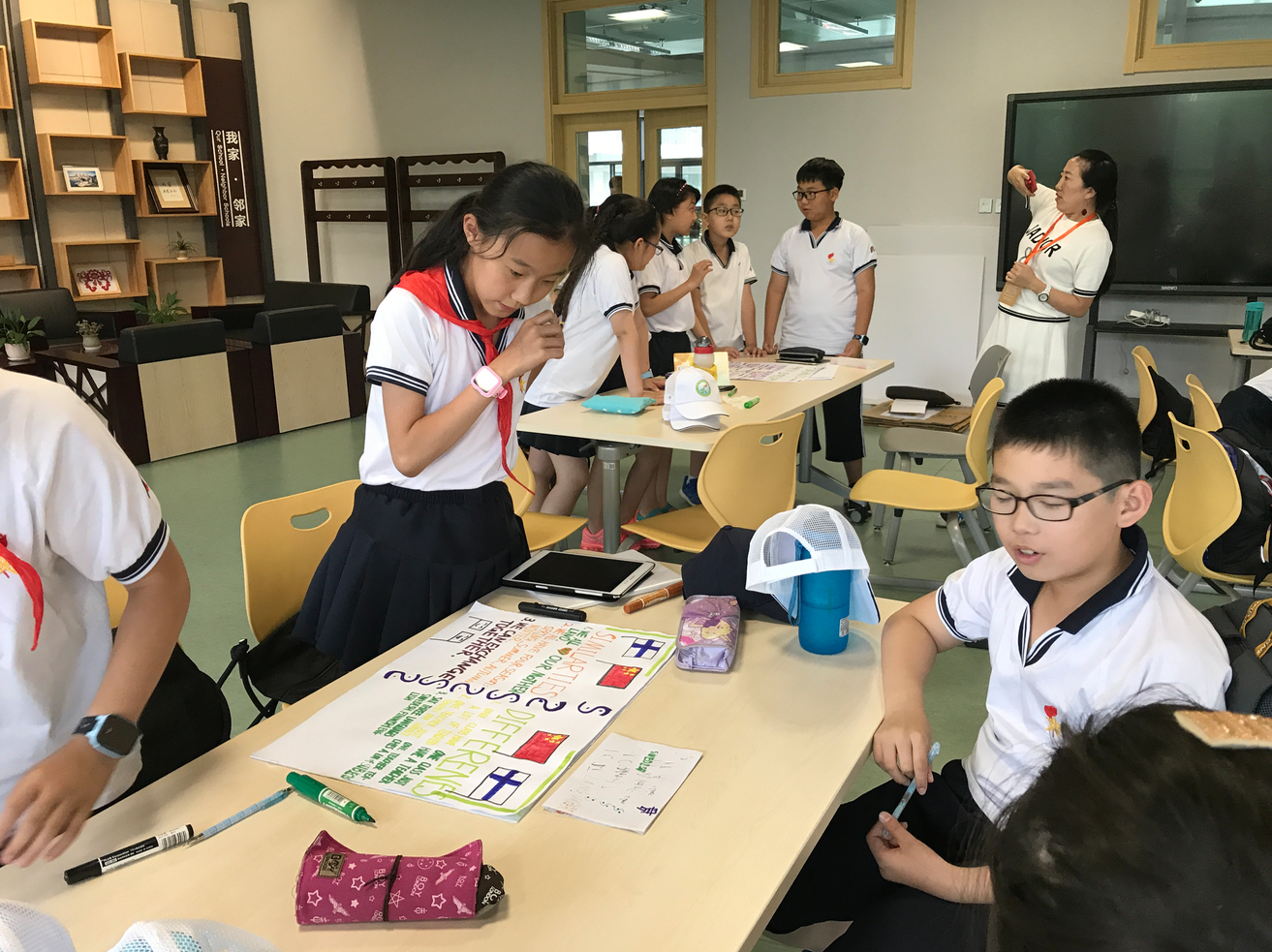
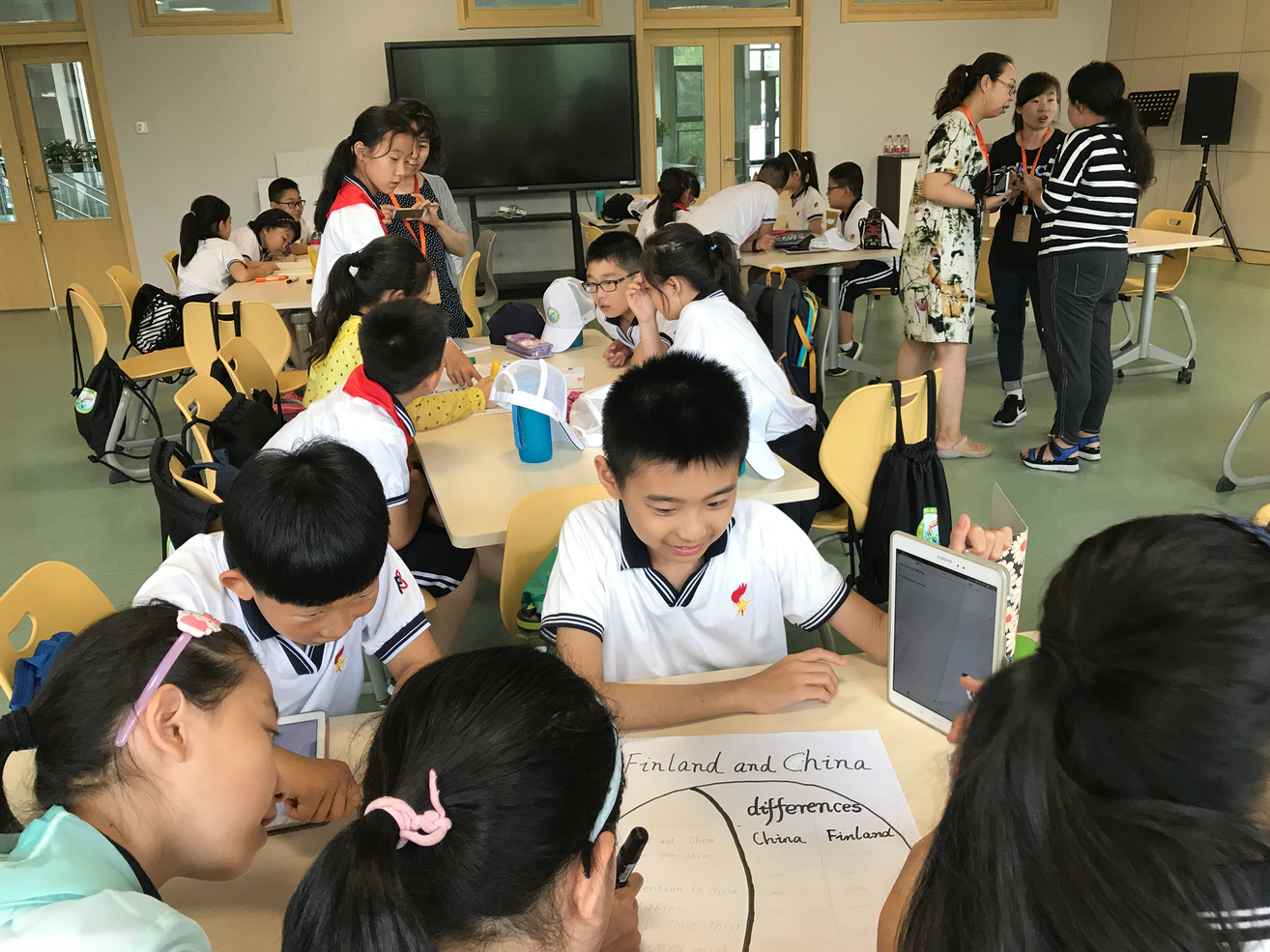
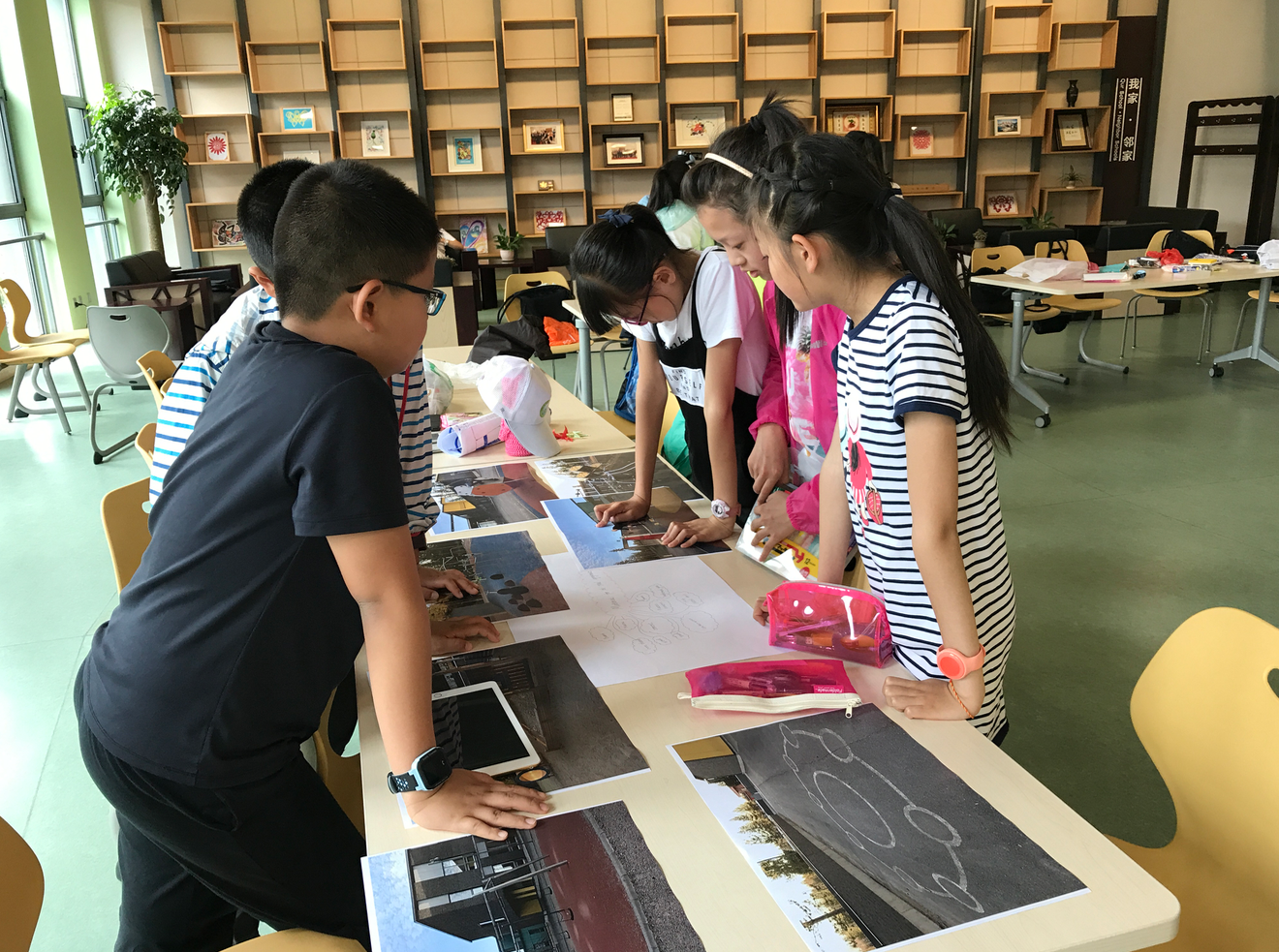
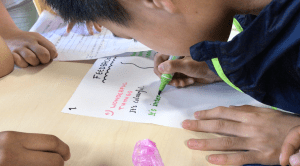
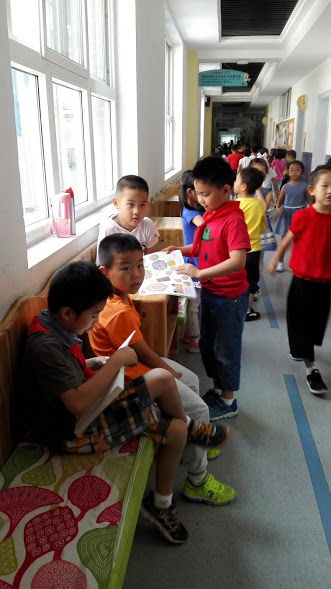
Our collaboration with students started with the games and the presentation about Finland. After these students made posters about the similarities and differences between China and Finland. The most popular similarities were four seasons, but the most popular difference was the lenght of summer time. About the school students were very eager to know that there is a free hot lunch in Finland, but in China they had to pay for their lunch. One of the biggest difference was the free-time that Finnish students have a lot and Chinese students only sometimes.

On the second time we met the students we played the Finnish game called “Juoru” (gossip in English). During that game students had to whisper to the next one what they did hear from the previous student. The main point of that game was to demonstrate how the sentence changed when it was told by many persons. The same thing happens with the gossips – they are not the same after many persons.

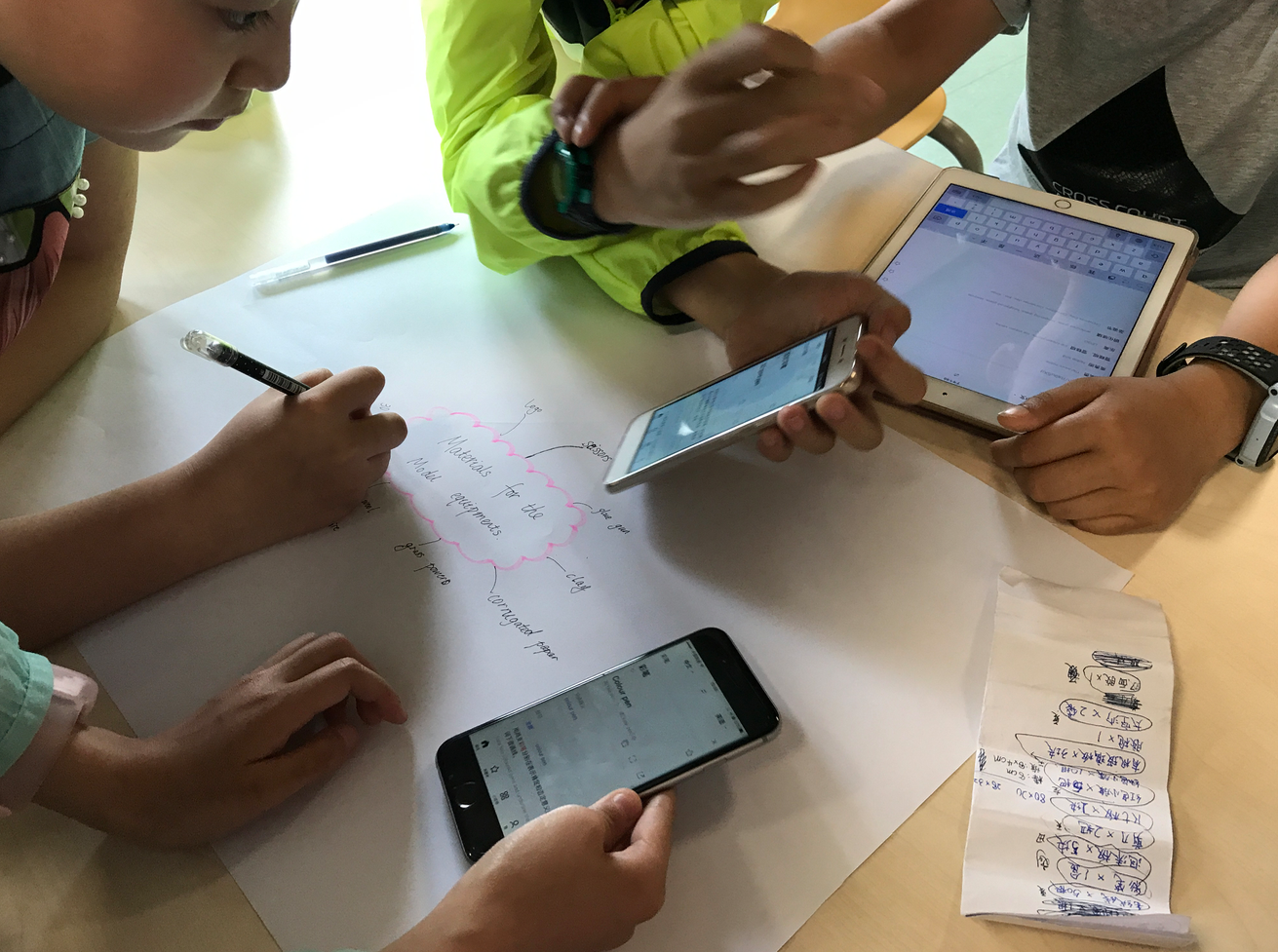
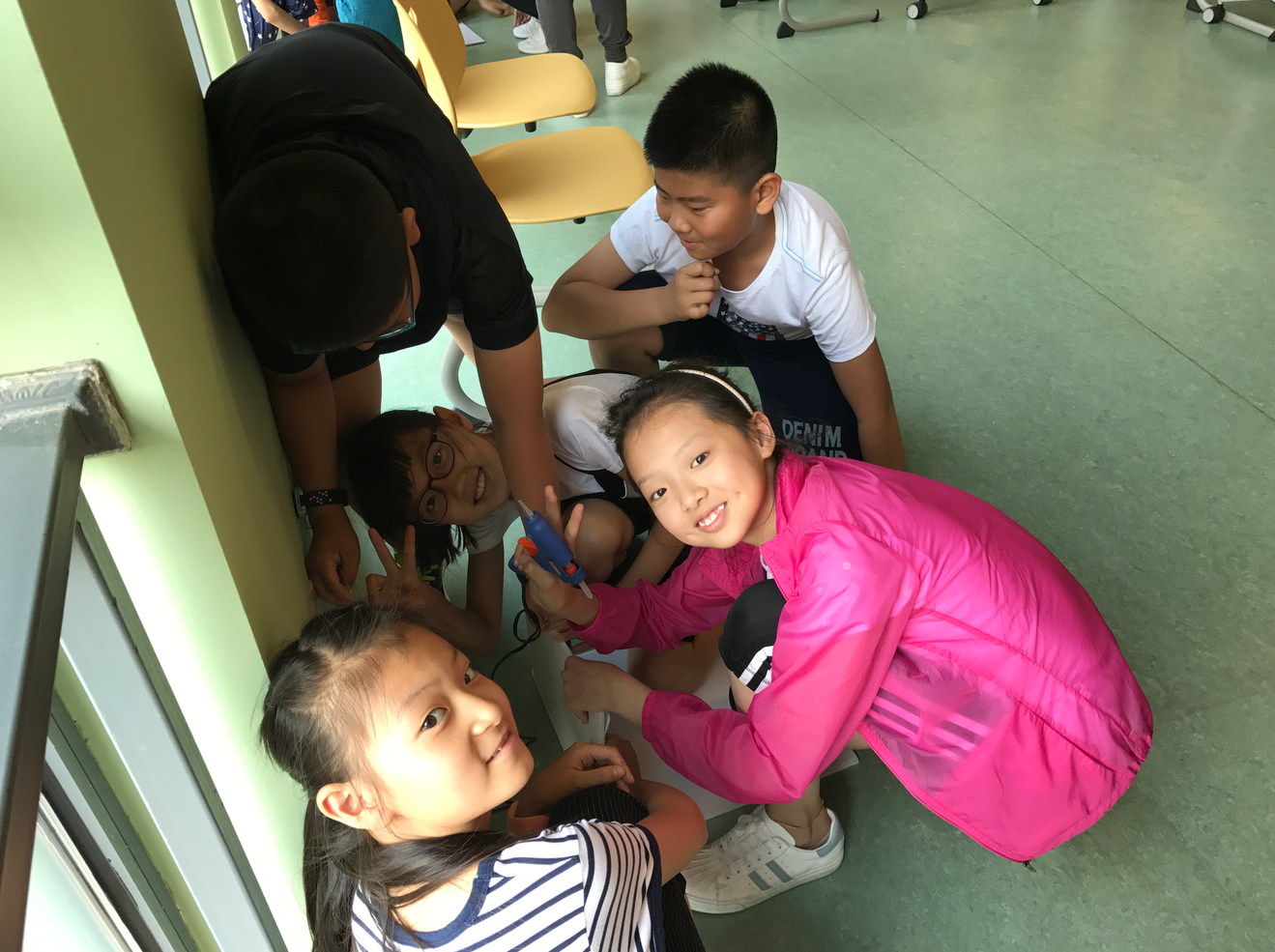
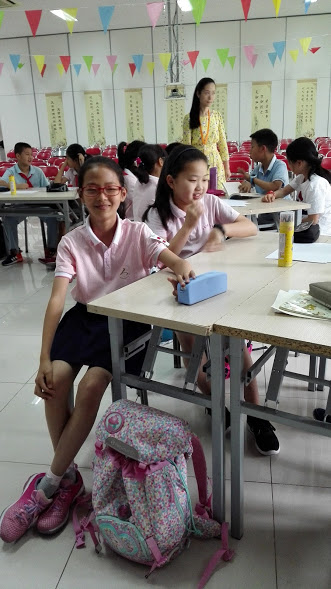
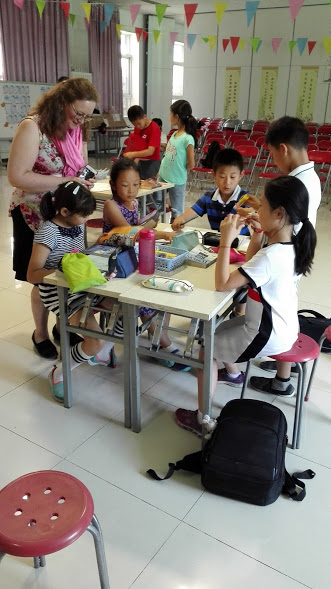
After playing students started to think about the basic knowledge of our playground equipment theme. In that case we used the method called “Learning cafe”. During that the groups of students moved from the table to another one and thought about the themes one by one. The themes were materials for the real equipment, materials for the model equipment, structures of the equipments, adjectives of the equipments of students’ dreams and places where to place designed equipments. During working students were allowed to use dictionaries and Internet to find translations and information. When every group had go through all themes, groups presented the ideas what was written down on the mind maps and we had a discussion about all themes.

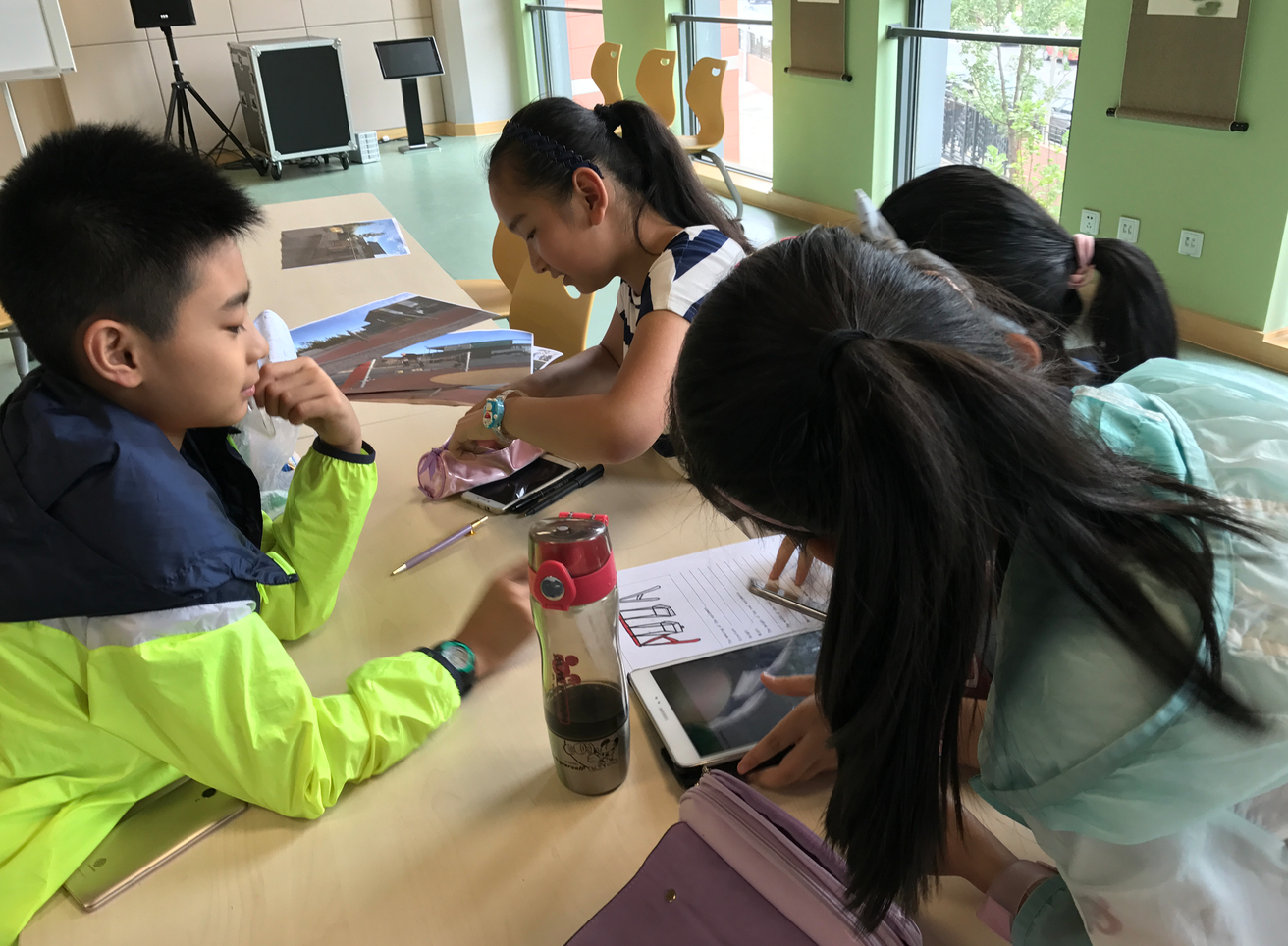
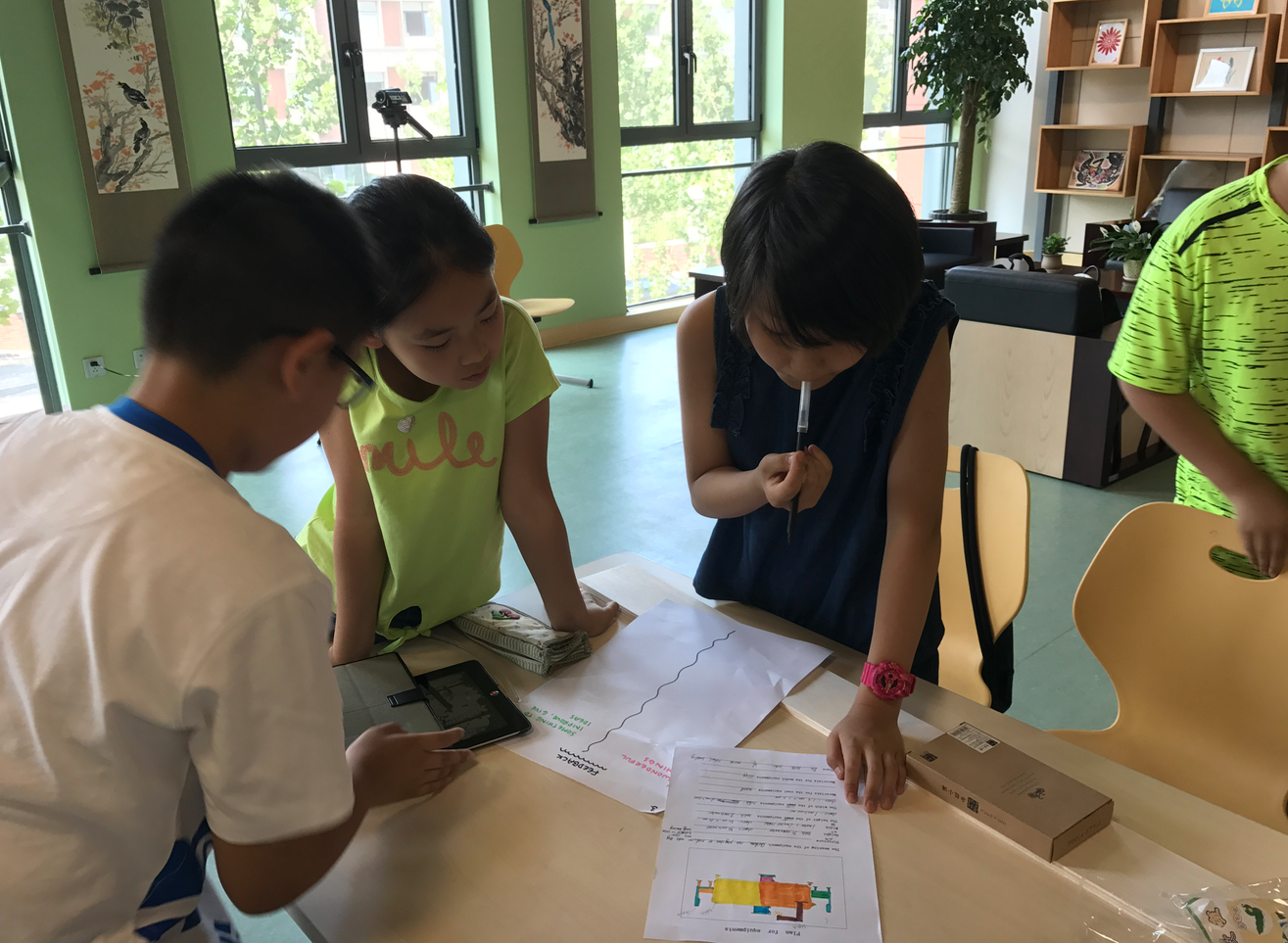
Students designed their playground equipment by using the planning paper. They drew a picture of the equipment and wrote down the main details of it, f. ex. the height, width, the size of the model, materials for the real one and for the model and also they thought where to place their equipment in their own school yard.

When the plannings where finalized, students gave feedback to other groups. For the second time we used the method called learning cafe. After getting the feedback, students improved their plans.

After planning it was time to build the miniature of their own school. During our demo lesson students continued their work and build the playground equipments that they planned before.

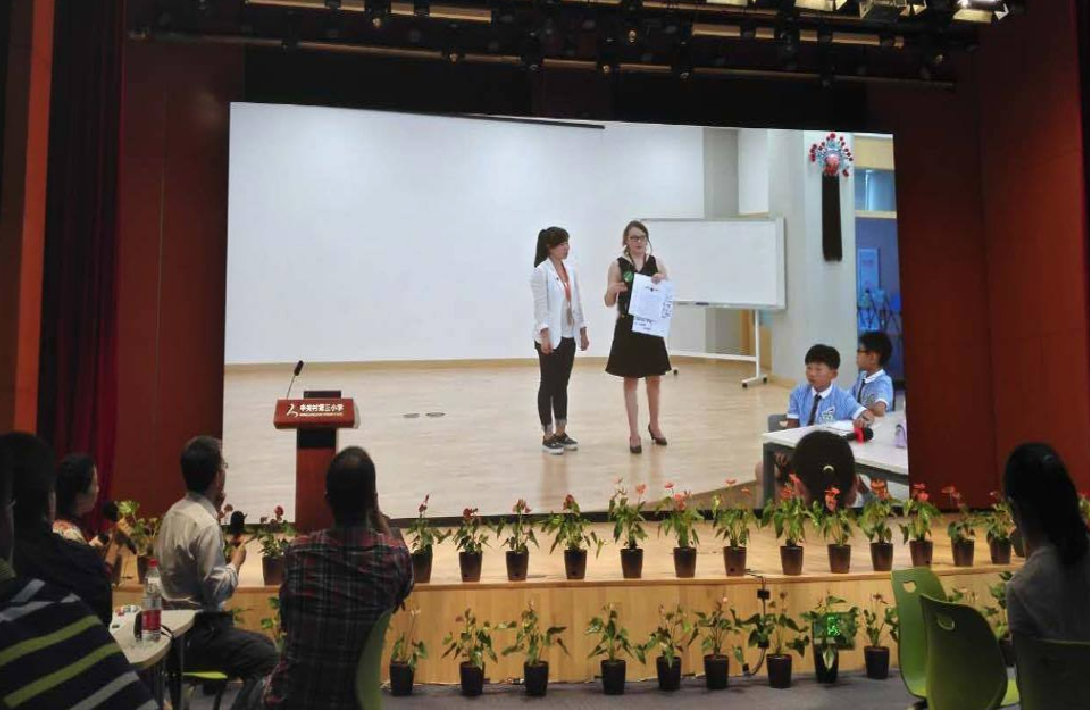
The conference participants followed the stream of our lesson in the Hall of Achievement. During our lesson there was also a interpreter who translated our lesson into Chinese. After the demo lesson we teacher went to the stage, presented our project and answered all questions asked by the audience.

We also presented them a video that tells what we had done during the Spring in Finland and in Taiyuan.

-Jaana from Metsokangas Comprehensive School, Oulu-

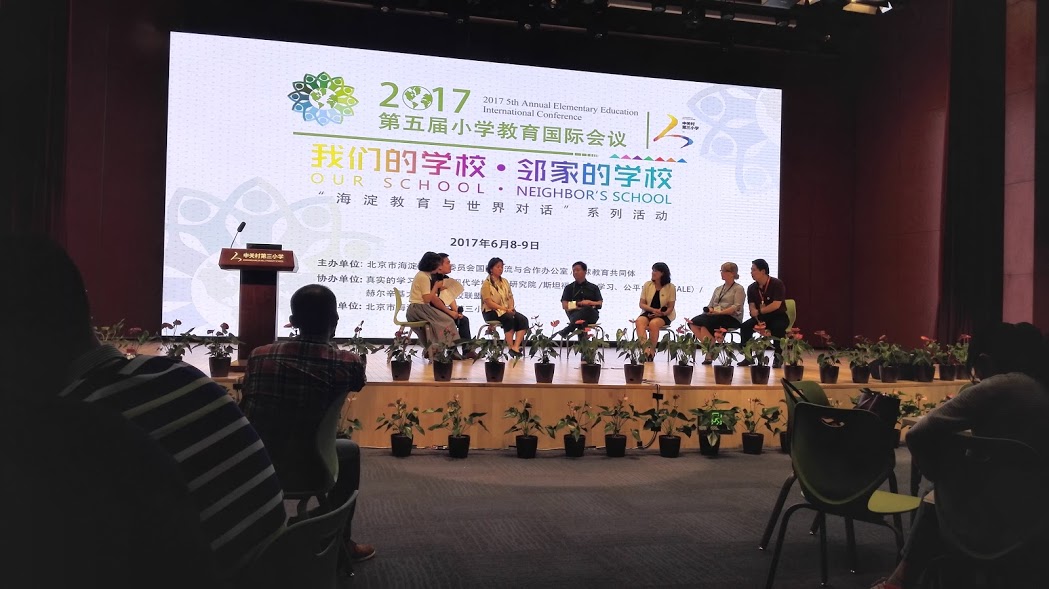
2017 The 5th Annual Elementary Education International Conference – Our School-Neighbor’s School

Global Educational Community and The Authentic Learning Institute held an international conference in Beijing on the 8th-9th June.


Innokas-Network had an important role by taking Finnish teachers to work and co-operate with their Chinese colleagues during the conference week. Before that teacher-teams had collaborated by planning and implementing projects on learning environments in their own countries. A few days before the conference teacher-teams met in Beijing and modified their projects. Moreover, Finnish teachers educated and supported their Chinese colleagues on the innovation process. The aim was to model Finnish teaching practices to Chinese teachers in authentic learning sessions.  To do so, there where Chinese students from different areas from China. Finally, teacher-teams gave demo-lessons to conference participants. The demos were reflected by the audience teachers and all the participants from the Beijing Normal University and Beijing Capital University and elsewhere.

Panel discussions were important parts of the conference. Minna took part in the discussion about the equality in Finnish schools and Finland. Johanna’s panel discussion was about the authentic learning. Both discussions were held in Chinese, so Finnish panelistics had an interpreter to keep them aware of the main point of the discussion.

Minna had a keynote speech about the Finnish school system and new curriculum, Innokas network and teaching practices. The main points of her speech were the phenomena and project based learning, collaboration between students and teachers and students based learning.

Moreover, the Finnish participants took part in the radio interview about the equality in Finland, transversals skills, multidisciplinary learning units and Finnish school’s success in PISA assessment. They also discuss the learning outcome and the main point of the new curriculum and it’s affects in nowadays’ Finnish schools.

-GEC team 2017: Minna K., Minna K., Johanna, Raini and Jaana-

3D creations

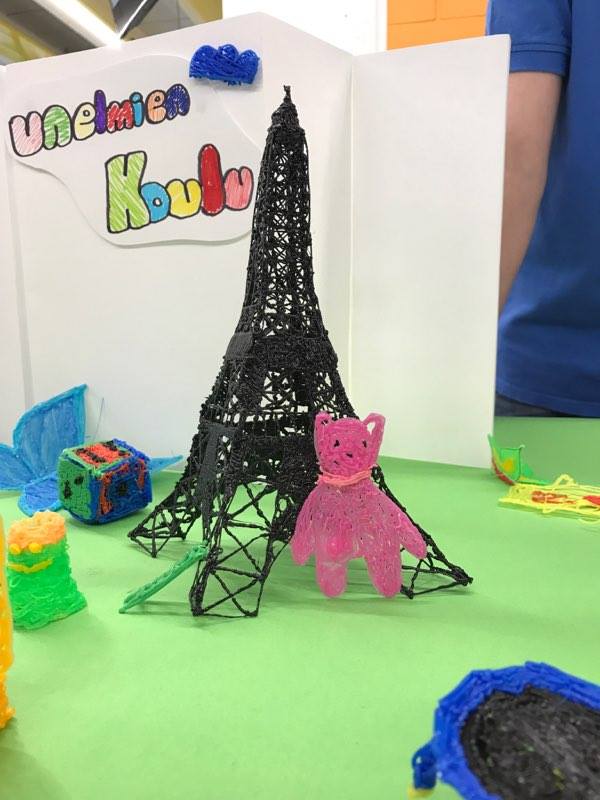
On the 18th and 19th of May we had a work shop in Robocup event in the university of Oulu. In that work shop the participants had a possibility to test 3D pen. The idea was to plan a school yard of their dreams and some playing equipments and constructions to the yard. The work shop was very popular and we got so many great creations made mostly by kids but also by the adults who took part to the event. Here are some photos of the creations that were made.

Petri, Jaana and Minna

GEC project about the school yard of students’ dreams

My and Junfang’s GEC project is about designing the school yard of students’ dreams. We have started our co-operation via WeChat, wrote the project plan and started the project with our students in May. The co-operation has been successful and WeChat very convenient way to keep in touch.


The main idea of our project is to design and build the playground equipment of students’ dreams and place them to the miniature versio of students’ own school yard. During the project students learn how the supporting structure of the playground equipments (f. ex. triangle structure, reinforced bars etc.) affects on safety. They also learn to design and build the playground equipments of their dreams, they test which material is the best option for the making a model of the playground equipment (paper, toothpins and marshmallows, 3D pen or modelling clay) and they also learn to make a video by using their own mobile phones or school’s digital cameras while documenting their work.

During the project students will work in groups of 3-4. At first all students study the knowledge about the playground equipments after seeing the pictures of equipments. They will study knowledge by searching answers to these questions: what kind of structure of the playground equipment is strong (f. ex. triangle structure, reinforced bars), what kind of shape of the playground equipment is strong and suitable and which are the best material for the real playground equipments and why they are the best options. They will also write down adjectives which describe the equipments of their dreams.

After studying the basic knowledge students will design their equipment by drawing it and writing down the main words they will need while presenting their plans. After that they will build, fold or mold their equipment and place it to the miniature versio of their school yard.

Junfang will build the miniature version of their school yard in Taiyuan before coming to Beijing with her students because they need the pictures of their school’s walls.

– Jaana from Metsokangas Comprehensive School –

Fulbright teachers visiting Oulu

Two Fulbright teachers from USA visited our school before the winter holiday.

On the first day in Oulu they visited the lukio of Oulunsalo. During that day they saw how the students use e-books and different software f. ex. during the Maths lessons, heard about the Finnish lukio system and interviewed a few students about the futuristic world.

screen-shot-2017-03-06-at-16-10-51

screen-shot-2017-03-06-at-16-14-15

screen-shot-2017-03-06-at-16-11-07

On the second day of their visit they visited our school in Metsokangas. Steven’s morning started with the interview with 9th Graders and Nat took part in the Chemistry lesson. After that they both had a possibility to visit the Handcrafts lesson with 6th Graders, then they visited our modern campus Korpimetso and after that they had a presentation for 6th Graders who heard information about their home country and after the presentation the 6th Graders asked them many questions about the theme.

The visit was excellent and it was a great possibility to our students to talk with native speakers while the students guided Nat and Steven from different class to another class.

– Minna, Petri and Jaana from Metsokangas Comprehensive School-

3D DIY products

screen-shot-2017-01-31-at-16-57-15

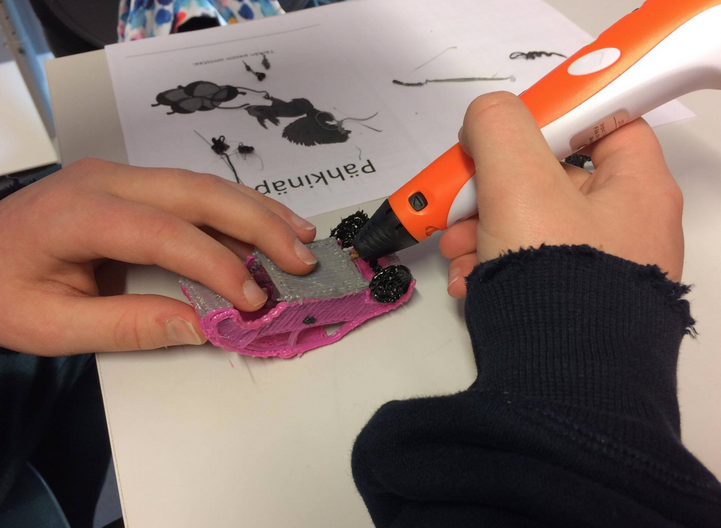
6th, 8th and 9th Graders of Metsokangas Comprehensive School have got a new technological tool: 3D pen. They are all very eager to plan cars as a group work and a few groups have also started to make their own car. When all cars will be ready students will organize the car show.

Some groups have also planned to make the Eiffel tower, Pyramids and helicopters so after this Spring our students will have many 3D DIY products made by using 3D pen.

– Jaana, Petri and Minna from Metsokangas Comprehensive School, Oulu –