Category Archives: Schools

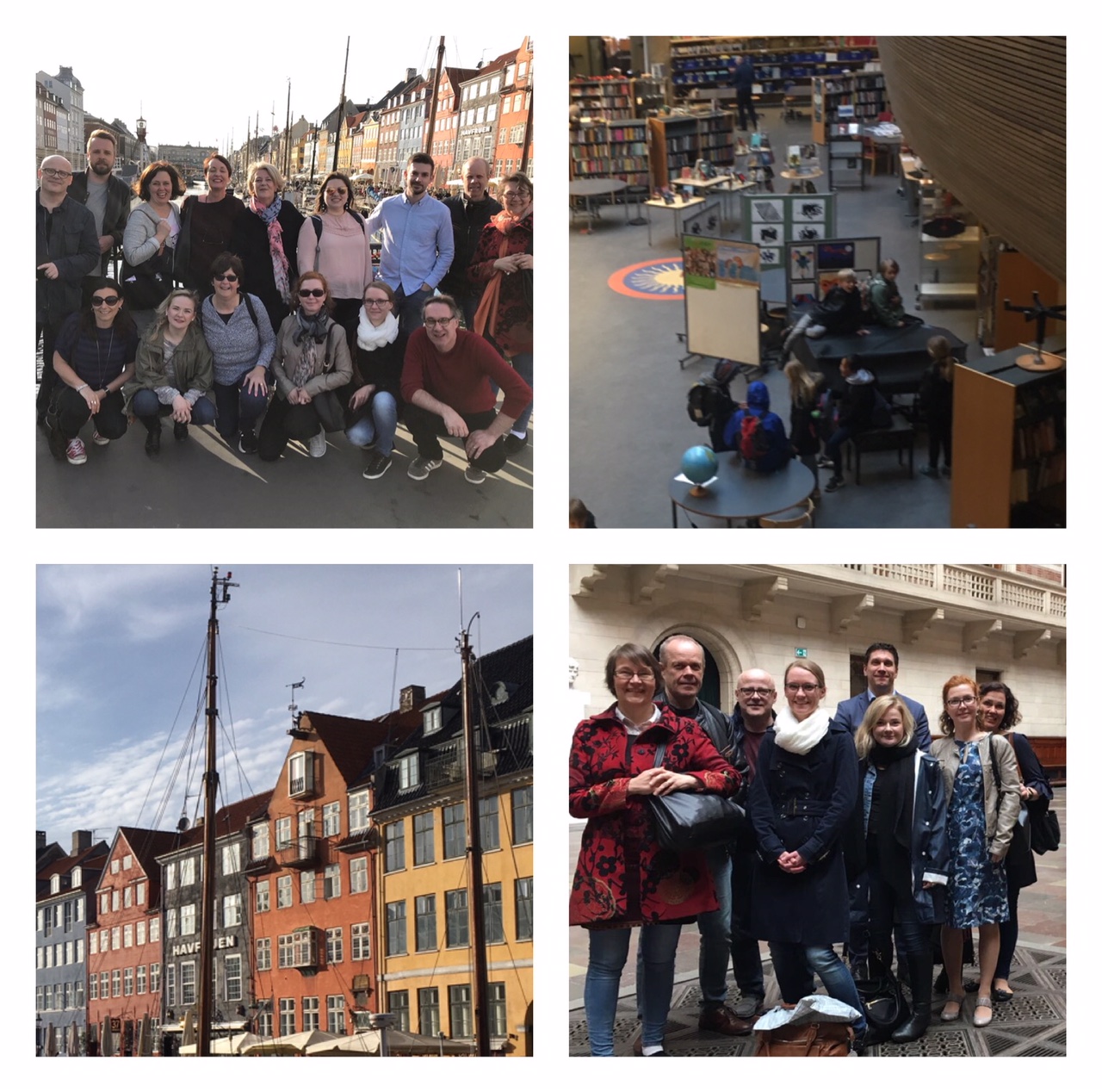
Schools involved.

Empowering Research-Practice Partnerships Across Europe: network kick-off in Paris 16.-18.9.

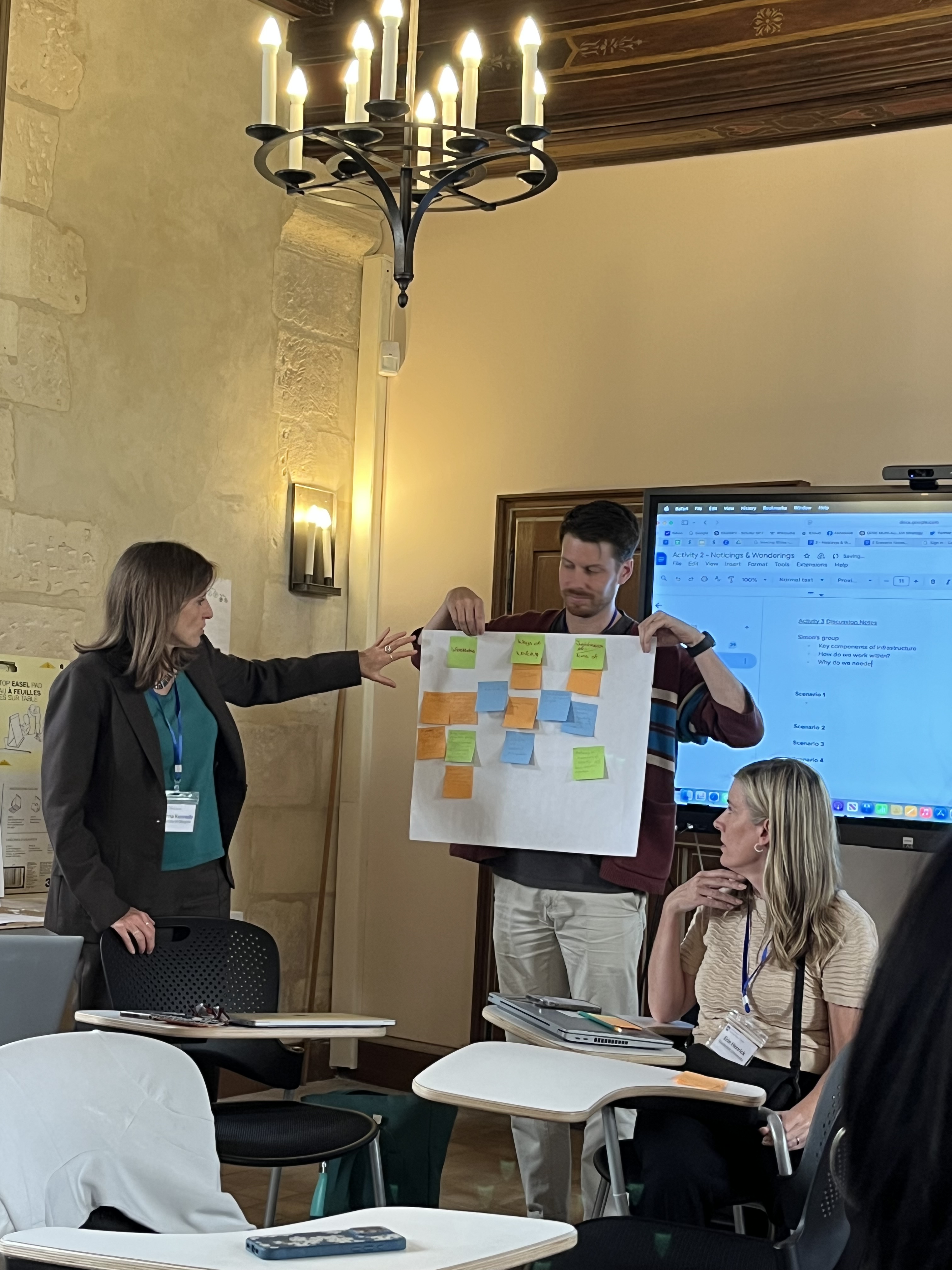
It is a wonderful honor to start to work on building a European level research-practice partnership (RPP) network. Earlier this year, Innokas Network joined the U.S. based National Network of Education Research-Practice Partnerships (NNERPP) in order to deepen our shared knowledge on RPP’s across contexts. The coordinating university of NNERPP, Rice University, hosted an expert group of RPP-researchers at the Rice Global Paris Center September 16-18. Representatives from the U.S. Germany, UK, Switzerland, France, Sweden, Norway and Finland came together to share RPP-related experiences, discuss the central features of RPP’s, envision what this European level network would look like and decide on next steps.

Two exciting days filled with interaction around first, getting to know one another second sharing and co-developing a base for what we envision for the network. It was a great opportunity to come together in the same space and time to discuss contextual issues, principles and experiences.

We are grateful for the organizing team for their efforts in bringing us all together and facilitating structured and meaning exchange of ideas. Equally we are thankful to all the participants as they stepped up to bring their own valuable experiences and views to the table.

RPP’s are an effective and meaningful approach to educational transformation and the field would benefit greatly from shared knowledge, research across contexts and joint initiatives.

Looking forward to what’s to come!

Tiina Korhonen & Laura Salo

Get excited about programming with EU Code Week! 

“EU Code Week is a grass-roots movement that celebrates creativity, problem solving and collaboration through programming and other tech activities. The idea is to make programming more visible, to show young, adults and elderly how you bring ideas to life with code, to demystify these skills and bring motivated people together to learn.” https://codeweek.eu/about 

The Innokas network, together with the Finnish National Agency for Education, challenged teachers, schools and educational institutions to get excited about programming and computational thinking in Finland! We hosted exciting and versatile distance learning lessons for students of different ages, from preschool to middle school. Schools were also invited to organize their own coding event with their students and to add their event to the EUCodeWeek.eu -page.  

In October 2023, nearly 15000 students and their teachers registered to participate in nine distance lessons with the topics ranging from coding games, to programming without devices, to artificial intelligence. It was truly an engaging and innovative way to get excited about programming and learn together! 

On the EU’s Code Week website, you can find tips, materials and courses for implementing events, as well as the English-language social media channels maintained by the European Commission, where you can follow the activities of the code week throughout the year. 

On the road to innovation

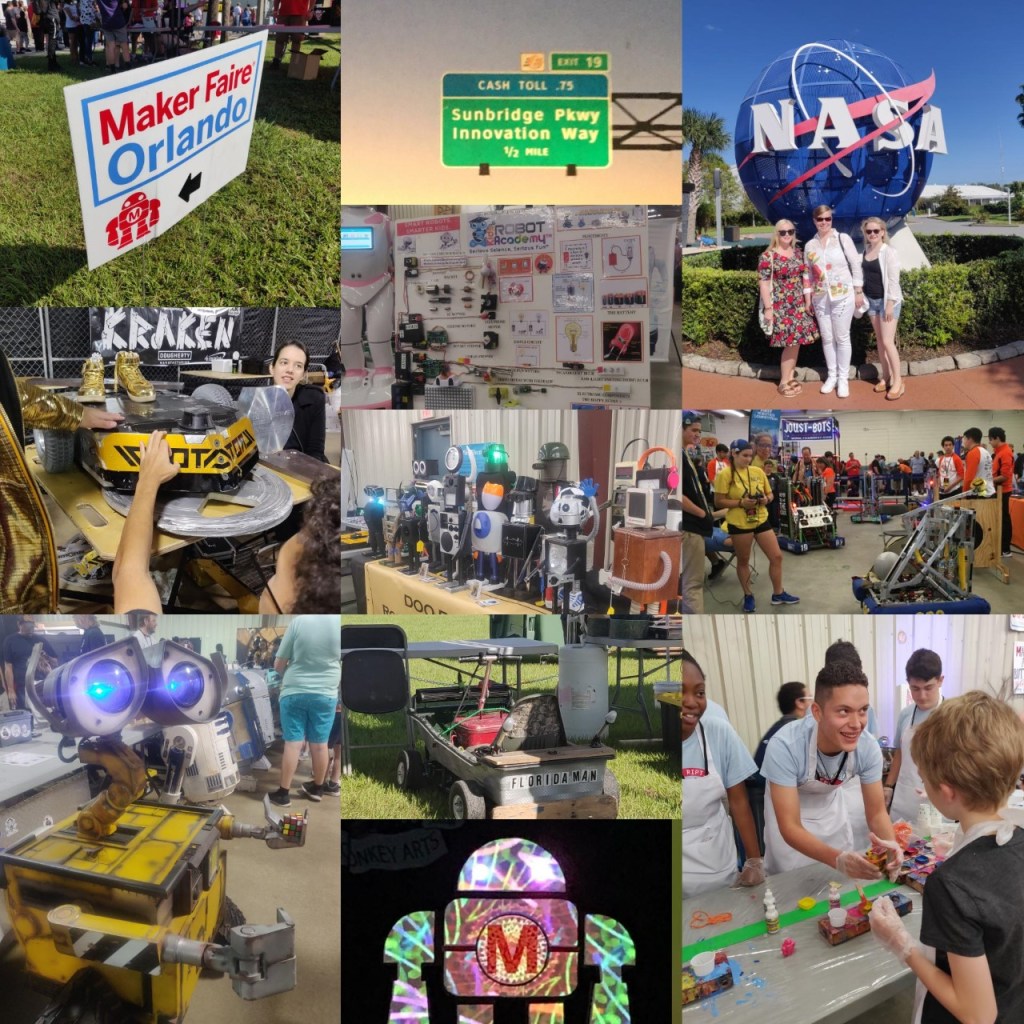
We had the opportunity to visit the Maker Faire event in Orlando, Florida in November 2019, to discover the latest in maker-activities. It was interesting to see how maker-activities were realized overseas! The event was characterized by a strong sense of community where families and people of all ages both participated and presented their own innovations and crafts. We had the possibility to meet with local organizers and networkers and discussed how this great event was organized with voluntary efforts and local flavors.

The range of activities was wide ranging from simple art and textile craft to Robot Ruckus fighting robots. Both traditional making and novel technologies were presented side by side with great pride and joy in making! Faire visitors were greeted by a drumming band and could easily spend the whole day discovering and doing together with family and friends. We got many great ideas to take home from the overall atmosphere and presentation, working together as a community to single maker-ideas!

Laura Salo, Asta Ansolahti & Tiina Korhonen

Innokas Network

EU CODE WEEK @ Jalavapuisto school, Espoo

I decided to build most of this years EU Code Week events in our school around the Cody Color -game that the Italians introduced to me in the EU Code Week summer school where 25 leading teachers got together to network and learn new things. Thank you Italy!

I started by cutting sheets of paper about 30 cm x 30 cm and introducing the rules to the game to my own class. The instructions you can find here: Color challenge. It’s never too late to try! The kids really loved it.

We spread around the hallways to play. We practiced on a 4 x 4 grid although we later tried on a much bigger one. This grid was excellent for 2 kids but even 4-5 could fit, as long as they knew their steps.

After my class learned the game well we sent invitations to teachers in our school to book us on Code week to come and teach it to their classes. We got many invitations and spent many hours on week 41 teaching other children in our school. On one particular lesson we had 10 spots in the gym for anyone to come and try. For first time users a good hint is to draw a small red dot on the back of your right hand and a yellow one on the left hand. Makes turning the right way a lot easier.

At the end of that class my class tried out the massive 12 x 13 grid with 24 children at the same time! It was super fun but the grid being so big you could only figure out your path so far and some of the success was pure luck.

We also tried the Battle Royale on the website to prepare us for the night school and beating all the parents. After playing on the floor the kids got a hang of the website game really quickly.

On Thursday the 10th of October we had a coding night school. The kids came back to school at 5 o’clock with a lot of parents who had accepted our code challenge. We started with about 50-60 people on the Battle Royale. Everything worked really smoothly. The parents got super excited too! But as hard as they tried they couldn’t beat the kids -some came close 🙂

On the same evening we also tested the code.org website and their Hour of code activities. We got quite a few diplomas printed for completing it!

And we also had time for doing the pixel art posted to EU Code Week teachers group in Facebook by Catherine Swain. Thank you for the fun idea!

But no night school would be fun without pizzas, playing tag on the dark hallways of the school and sleeping altogether on the gym floor. We’ll do all this again next year!

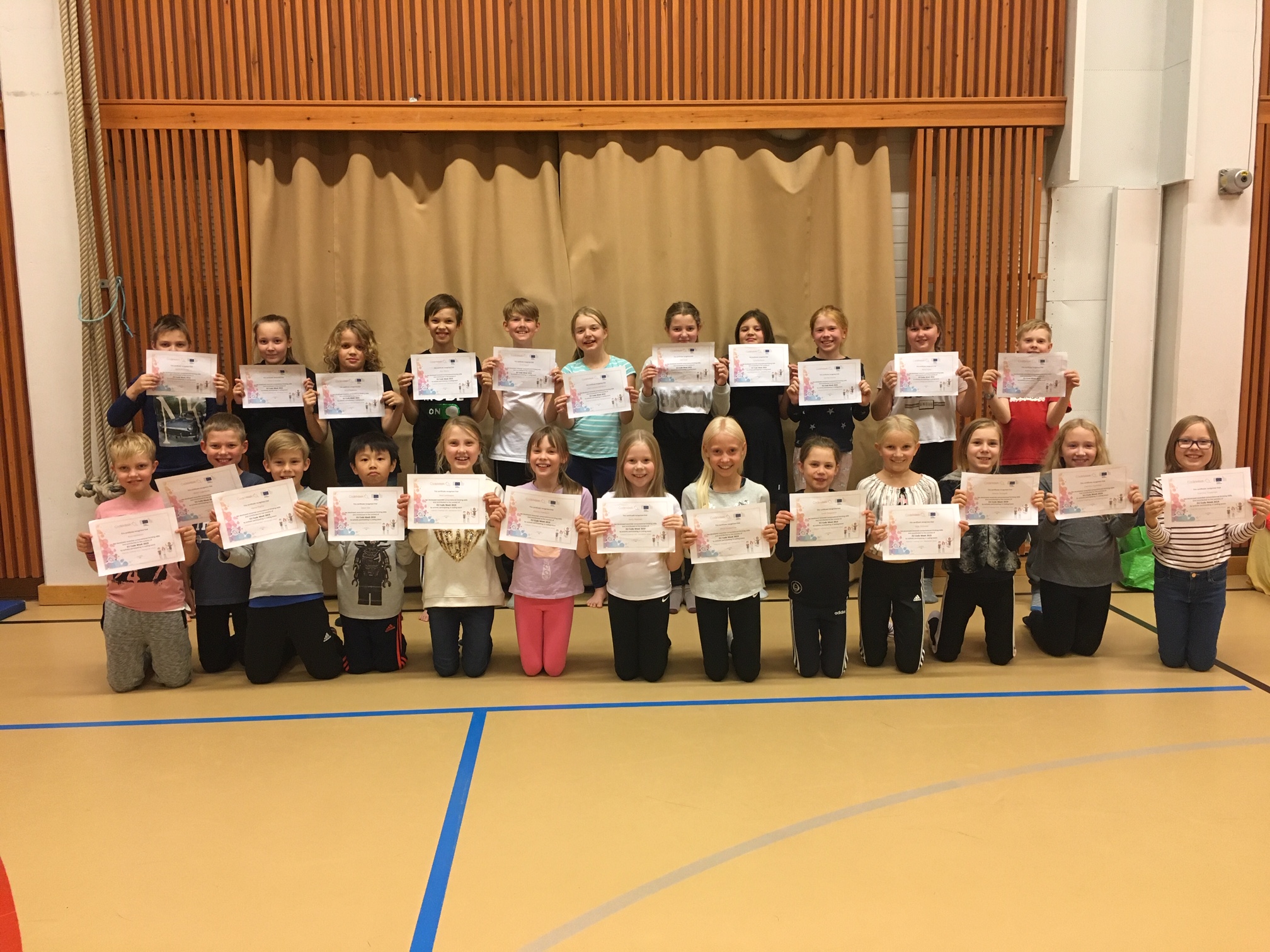
And this excellent 4K class has well deserved their certificates of recognition for contributing to the success of EU Code Week 2019. Good job!

IMG_1373

Visit to Marymount School of New York

I had an opportunity to visit Marymount School of New York on my last day in US. Marymount School of New York is an independent, Catholic day school for girls. The motto of the school is: Challenge yourself to grow in heart and mind – who wouldn’t agree with that. School has 760 students from 3-years-old to 18-year-old. Class sizes are small, only 16-17 students in one group. The school promotes development of the lifelong skills of critical thinking and problem solving. One school year costs 15 000$, but even though the costs are high, there are more applicants to school than the school can take.

Marymount School is known from its three Maker Spaces. Spaces are perfectly organized, there is plenty of stuff to play, create, design, build – innovate either alone or with peer or with group. One educator is responsible for all the equipment set in shelves, tables and lockers; educator is present at Maker Space all day long to help students if they have problems. I truly fell in love with this enthusiasm and creativity. Students are fostered to making culture. I saw beautiful combination of Art pieces and Technology, I look up to teachers’ innovative mind sets. STEAM in action!

Students work with iPADs or MacBook Airs in a 1:1 environment; Marymount School is an Apple Distinguished School. The school works with organizations like Metropolitan Museum of Art and DNA Learning Center Manhattan. School has even two classrooms at MET, and Art teachers from both the museum and from the school teach students. I found this very inspiring: school community broadens to another community, wau! ‘Dream it. Design it. Make it.’ says school’s webpage. No wonder the Marymount School of New York is one of the best in whole USA.

Mr Don Buckley, who hosted me during my visit, is an educator and designer. It was good to have somebody taking care of me, because the school building was so big, divided into many floors and sections. The oldest part of the school building is from turn-of-the-century, a beautiful building with crystal chandeliers and wall-to-wall-carpets. The school was established in 1926 by Mother Marie Joseph Butler. The second building, the enlargement, is from 1984. Nowadays the school needs more space, and a new school building will be build in next two years. The budget for 10-floor school building in Harlem is around 100 000 000$. Just for comparison, the most expensive school building, Opinmäki comprehensive school in Espoo, cost 52 million euros on 2015. Mr Buckley is responsible for taking teachers’ ideas and opinions to architectures, it is a co-design project with staff, engineers and architectures. This reminds me of participatory design, a co-design model I have worked with here in Finland .

Marymount School has different sorts of libraries for students at different ages. Small children’s library is a small cozy place with one, huge armchair in the middle of the room. The library for upper secondary school students is a silent place for reading and individual working. Librarian said, it is important to have a silent room in a city like New York. For groupwork, there are many open working spaces around the buildings, students are free to choose their place of work.

Compared to Finland teachers’ don’t have to obtain Master degree from the University. Teachers negotiate their own salaries, the salary rate is from 60 000$ to 120 000$ / year depending on how effective and capable teacher is. Marymount School provides its teachers a health insurance, retirement advisory and a hot, daily lunch. And, two teachers mentioned to me, a 10 week vacation in summer is a fine priviledge to have.

I learned so much during my visit, that I hope next week when I’ll host two teachers from Marymount school in my school, they would have as good experience as I had.

Raini sipilä

Erasmus 3T – Collaborating in Bedford 


This time teachers and school developers from Denmark and Finland gathered in Bedford for a week in October. The week was full of different school visits, great conversations about the English educational system and observation of the three T’s (time, talent and technology (and trust)).  

IMG_20181102_145927_996

Our visit to England started with a reunion in a local restaurant. After a fun evening together it was time to start the activities. On the first day we had a chance to visit the University of Bedfordshire. It was very interesting to hear about the English school system. We spent the next days in different schools where participants got to know the school, observe lessons and even teach microlessons. The last day of the week provided again an opportunity for each delegation to present their thoughts and reflections to each other and discuss together.  

When discussing technology we found similar things that came up in both Finnish and Danish reflections. For us technology education in England seems like a separate entity from other education. This led to discussions about how to integrate technology in schools in order that it would be helpful and useful in pedagogical way.  

Reflections on talent included discussions on grouping of pupils and ranking. One big topic was also trust. We noticed that headmasters trust their teachers but the lack of trust is evident from the government’s side and that leads to ongoing testing and registrations.  

In a time perspective we talked about structured lessons and classrooms. Everything seemed to be very structured and that was one thing that was different from Finnish schools where we don’t have strict schedules and pupils may have just one or two tasks per lesson. Overall our visit to Bedford was great and we learned a lot about the English perspective to education and at the same time gained new insight into our own system. 

Asta Ansolahti and Kati Sormunen / The Innokas Network 
 

Jaana’s and Alice’s GEC project in Beijing


Our collaboration with students started with the games and the presentation about Finland. After these students made posters about the similarities and differences between China and Finland. The most popular similarities were four seasons, but the most popular difference was the lenght of summer time. About the school students were very eager to know that there is a free hot lunch in Finland, but in China they had to pay for their lunch. One of the biggest difference was the free-time that Finnish students have a lot and Chinese students only sometimes.

On the second time we met the students we played the Finnish game called “Juoru” (gossip in English). During that game students had to whisper to the next one what they did hear from the previous student. The main point of that game was to demonstrate how the sentence changed when it was told by many persons. The same thing happens with the gossips – they are not the same after many persons.

After playing students started to think about the basic knowledge of our playground equipment theme. In that case we used the method called “Learning cafe”. During that the groups of students moved from the table to another one and thought about the themes one by one. The themes were materials for the real equipment, materials for the model equipment, structures of the equipments, adjectives of the equipments of students’ dreams and places where to place designed equipments. During working students were allowed to use dictionaries and Internet to find translations and information. When every group had go through all themes, groups presented the ideas what was written down on the mind maps and we had a discussion about all themes.

Students designed their playground equipment by using the planning paper. They drew a picture of the equipment and wrote down the main details of it, f. ex. the height, width, the size of the model, materials for the real one and for the model and also they thought where to place their equipment in their own school yard.

When the plannings where finalized, students gave feedback to other groups. For the second time we used the method called learning cafe. After getting the feedback, students improved their plans.

After planning it was time to build the miniature of their own school. During our demo lesson students continued their work and build the playground equipments that they planned before.

The conference participants followed the stream of our lesson in the Hall of Achievement. During our lesson there was also a interpreter who translated our lesson into Chinese. After the demo lesson we teacher went to the stage, presented our project and answered all questions asked by the audience.

We also presented them a video that tells what we had done during the Spring in Finland and in Taiyuan.

-Jaana from Metsokangas Comprehensive School, Oulu-

2017 The 5th Annual Elementary Education International Conference – Our School-Neighbor’s School

Global Educational Community and The Authentic Learning Institute held an international conference in Beijing on the 8th-9th June.


Innokas-Network had an important role by taking Finnish teachers to work and co-operate with their Chinese colleagues during the conference week. Before that teacher-teams had collaborated by planning and implementing projects on learning environments in their own countries. A few days before the conference teacher-teams met in Beijing and modified their projects. Moreover, Finnish teachers educated and supported their Chinese colleagues on the innovation process. The aim was to model Finnish teaching practices to Chinese teachers in authentic learning sessions.  To do so, there where Chinese students from different areas from China. Finally, teacher-teams gave demo-lessons to conference participants. The demos were reflected by the audience teachers and all the participants from the Beijing Normal University and Beijing Capital University and elsewhere.

Panel discussions were important parts of the conference. Minna took part in the discussion about the equality in Finnish schools and Finland. Johanna’s panel discussion was about the authentic learning. Both discussions were held in Chinese, so Finnish panelistics had an interpreter to keep them aware of the main point of the discussion.

Minna had a keynote speech about the Finnish school system and new curriculum, Innokas network and teaching practices. The main points of her speech were the phenomena and project based learning, collaboration between students and teachers and students based learning.

Moreover, the Finnish participants took part in the radio interview about the equality in Finland, transversals skills, multidisciplinary learning units and Finnish school’s success in PISA assessment. They also discuss the learning outcome and the main point of the new curriculum and it’s affects in nowadays’ Finnish schools.

-GEC team 2017: Minna K., Minna K., Johanna, Raini and Jaana-

3D creations

On the 18th and 19th of May we had a work shop in Robocup event in the university of Oulu. In that work shop the participants had a possibility to test 3D pen. The idea was to plan a school yard of their dreams and some playing equipments and constructions to the yard. The work shop was very popular and we got so many great creations made mostly by kids but also by the adults who took part to the event. Here are some photos of the creations that were made.

Petri, Jaana and Minna

GEC project about the school yard of students’ dreams

My and Junfang’s GEC project is about designing the school yard of students’ dreams. We have started our co-operation via WeChat, wrote the project plan and started the project with our students in May. The co-operation has been successful and WeChat very convenient way to keep in touch.


The main idea of our project is to design and build the playground equipment of students’ dreams and place them to the miniature versio of students’ own school yard. During the project students learn how the supporting structure of the playground equipments (f. ex. triangle structure, reinforced bars etc.) affects on safety. They also learn to design and build the playground equipments of their dreams, they test which material is the best option for the making a model of the playground equipment (paper, toothpins and marshmallows, 3D pen or modelling clay) and they also learn to make a video by using their own mobile phones or school’s digital cameras while documenting their work.

During the project students will work in groups of 3-4. At first all students study the knowledge about the playground equipments after seeing the pictures of equipments. They will study knowledge by searching answers to these questions: what kind of structure of the playground equipment is strong (f. ex. triangle structure, reinforced bars), what kind of shape of the playground equipment is strong and suitable and which are the best material for the real playground equipments and why they are the best options. They will also write down adjectives which describe the equipments of their dreams.

After studying the basic knowledge students will design their equipment by drawing it and writing down the main words they will need while presenting their plans. After that they will build, fold or mold their equipment and place it to the miniature versio of their school yard.

Junfang will build the miniature version of their school yard in Taiyuan before coming to Beijing with her students because they need the pictures of their school’s walls.

– Jaana from Metsokangas Comprehensive School –