Erasmus 3T – Collaborating in Bedford 


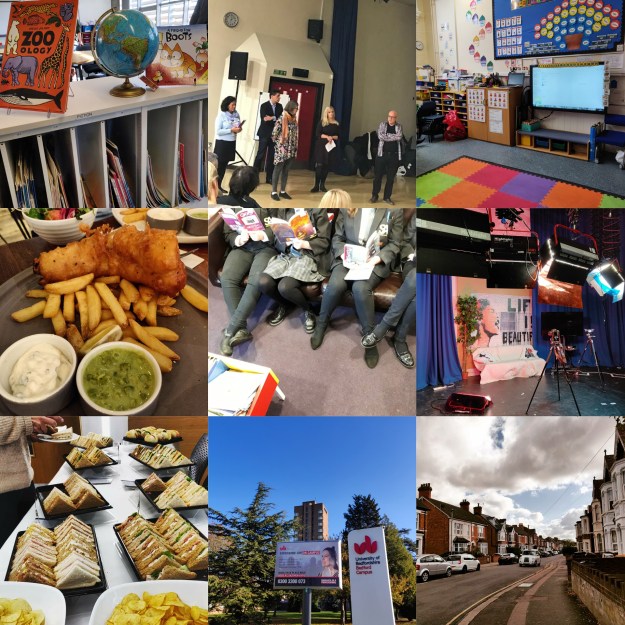
This time teachers and school developers from Denmark and Finland gathered in Bedford for a week in October. The week was full of different school visits, great conversations about the English educational system and observation of the three T’s (time, talent and technology (and trust)).  

IMG_20181102_145927_996

Our visit to England started with a reunion in a local restaurant. After a fun evening together it was time to start the activities. On the first day we had a chance to visit the University of Bedfordshire. It was very interesting to hear about the English school system. We spent the next days in different schools where participants got to know the school, observe lessons and even teach microlessons. The last day of the week provided again an opportunity for each delegation to present their thoughts and reflections to each other and discuss together.  

When discussing technology we found similar things that came up in both Finnish and Danish reflections. For us technology education in England seems like a separate entity from other education. This led to discussions about how to integrate technology in schools in order that it would be helpful and useful in pedagogical way.  

Reflections on talent included discussions on grouping of pupils and ranking. One big topic was also trust. We noticed that headmasters trust their teachers but the lack of trust is evident from the government’s side and that leads to ongoing testing and registrations.  

In a time perspective we talked about structured lessons and classrooms. Everything seemed to be very structured and that was one thing that was different from Finnish schools where we don’t have strict schedules and pupils may have just one or two tasks per lesson. Overall our visit to Bedford was great and we learned a lot about the English perspective to education and at the same time gained new insight into our own system. 

Asta Ansolahti and Kati Sormunen / The Innokas Network 
 

Erasmus 3T – Collaborating in Helsinki

Teachers and school developers from Denmark and Great Britain gathered in Helsinki for a September week full of immersion in the Finnish educational system and observation of the three T’s (time, talent and technology). We welcomed new participants and had a warm reunion with those who have been a part of the project for longer. The week started off with a welcome session that, true to Finnish tradition, included sauna and swimming. The following two days were spent in two schools where participants got to know the school, observe lessons and even teach Finnish students. The afternoon time was spent reflecting and finding those transferable ideas that one could take home. One day was dedicated to familiarizing with the educational system and the work of the Innokas Network which supports schools in developing 21st century skills through the innovative use of technology. Participants also immersed in gaming when they were introduced to and competed in the pedagogically relevant Seppo-game and discussed how to use gamefulness in education. The last day of the week provided an opportunity for each delegation to present their thoughts and reflections to each other and discuss together while enjoying a traditional cinnamon roll.

Reflections on technology included discussion on the pedagogical use of technological tools. Technology was seen to motivate students and participants observed that the tools for these activities are in place and available in Finnish schools.  Talent was discussed for one with reference to supporting talented students which is an area that needs development in the Finnish system. Currently most emphasis is placed on the support of students with special needs. Time was approached from both the students and the teachers perspective. Short school days and lesser control were discussed and an observation was made that Finnish students still seem to have clear boundaries and guidelines within which to work autonomously. Differences in teachers’ working hours got the participants thinking about the pro’s and con’s of varying work day models. On one hand the freedom to leave work after teaching was valued and on the other hand set working hours would secure more joint planning time and possibilities for collaboration.

Laura Salo, Kati Sormunen and Asta Ansolahti / The Innokas Network

Innokas-Network’s robotics tournament

fynd_banneri_logo3.png

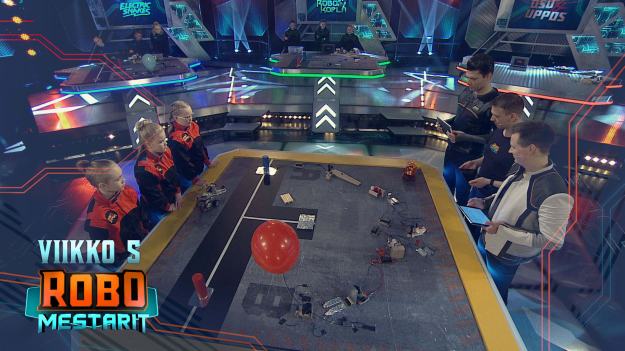
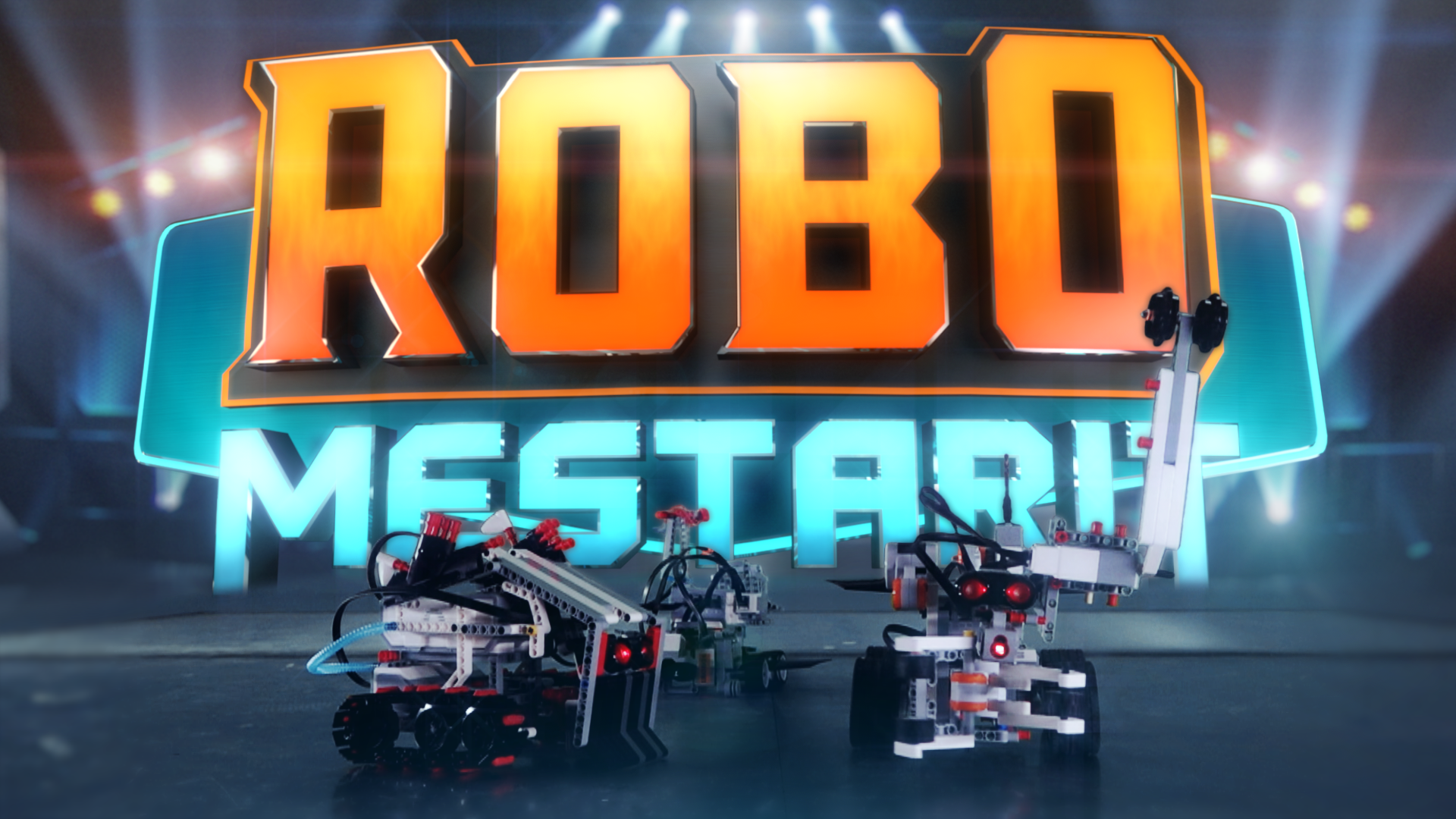
Since the beginning of April YLE has broadcasted a tv-show called Robomestarit. It airs every Sunday morning. It is a production based on the idea of a robotics tournament designed by Innokas-network. It aims to present robotics and coding while also showing what they make possible. At the same time the show is both entertaining and pedagogical.

Last weekend we got to see the finals of X-Sumo and Rescue and who won the competitions. The last episode of the show will be aired next Sunday. For both Freestyle and Dancing with robot it is time for the finals!

Yle/ Rami Pohjalahti.

The different competition tracks of Robomestarit are based on Innokas-Network’s robotics tournament which is held every year in different cities. This year it takes place in Tampere, 14th to 16th of May. The tracks are Pelastus (Rescue), X-Sumo, Tanssii robotin kanssa (Dancing with a robot) and Freestyle. The last mentioned has three teams competing in different challenges every week. . The winner is announced in the last episode.  Dancing with the robot is a different kind of track. If you want to win you need to do it on social media and get the most votes. X-Sumo works as a cup where two teams put their robots to the test of strength in robo sumo-wrestling and winner continues in the race. Rescue track puts the robots in different kind of situations where their mission is to transport a fuel tank to the space ship.

13-1-4292595-1525605721965.jpg

The teams taking part come from all over Finland. Most of the participants are 5th or 6th graders but there are some exceptions. Many of the teams have won their regional preliminary competitions and this is their final step.

Every episode lasts about half an hour. Naturally most of it is about the competitions but there is also much more to see and learn. One of the show’s presenter, Innokas-Network’s educator Juho Kemell has visited different kind of working environments that have robots. Those visits are an educational peek to the importance that robotics have in problem solving. While of course it is interesting to just watch the show the viewers also get to take part through social media and open challenges. Best viewer challenge participants get their videos shown in the program. Every episode has also an educational part, the ABC of coding. It teaches the very basics of coding and getting more into detail every episode. Don’t forget to check out their YouTube channel with interesting extra content.

ROBOMESTARIT-still-intro_00497

More info: http://yle.fi/robomestarit

In YLE areena: https://areena.yle.fi/1-4356057

Robomestarit in Youtube: https://www.youtube.com/channel/UChM3KcavvF7O48aEn9a_diQ/featured

(All the pictures are property of YLE)

Visiting the filming of Robomestarit!

At the YLE (Finnish National Broadcasting company) studio in Tampere adults and kids are moving smoothly between the lobby, dressing room and studio. The filming of the Robomestarit tv-show has started. The day starts when the presenters and the teams arrive. Last minute corrections are made to the outfits and people are getting familiar with the studio. The children seem really excited in their cool custom-made outfits and the atmosphere is electric. The schedule shows minute by minute what is going to happen during long day which ends in the filming of the actual episode. In addition to the filming in the studio, the day also consists of group and individual interviews.

The teams have a strict daily schedule. Participants go to make-up like any other TV stars. There is a lot of waiting and many children have travelled a long way to be here. Still everybody thinks it’s surely worth it. When following the filming of the interviews it is great to hear the young participants speak about their teams and how the skills they are practicing will help them in the future. In the middle of a relaxed chat with the children one of the director comes and takes them back to the studio. The face shots need to be retaken. Here we go again…

One of the presenters of Robomestarit, Juho Kemell, works as an educator in The Innokas Network. He has arrived early in the morning to get ready for the day’s filming. -“It has been quite a hassle which means it will be a great day!” Some material has been filmed before today. Juho and the crew have been visiting different kinds of companies during the last couple of months and observed different robots used in various industries. The judges are also preparing for the day and going through the most important rules regarding the upcoming contests. -“It is an awesome show!” says Erkki Hautala, an X-sumo judge and Innokas Network’s educator while guiding the teams to test and prepare their robots.

Yle/ Rami Pohjalahti.


Melissa Kaivo, known to children from the TV-show Galaxi, is also a part of the production. She is one of the presenters and a travelling journalist who visits the teams’ schools. She thinks that the live-aspect of the show is very exciting. Not everything is filmed beforehand thus letting all of the viewers, teams and presenters really live through the show throughout the spring while the show airs. She also thinks it is cool that the viewers get to influence and take part in the program through social media.

The fog machines are blowing in the studio and the atmosphere is almost too impatient. The audience, teams and the presenters are ready. Lights, cameras, applause! What happens after this can be seen on YLE channels or YLE-areena.

The Innokas Network and YLE are putting together and filming an 8episode long TV-show Robomestarit in the spring 2018. The Robotics Society in Finland is supporting the production with the reallife examples. The show is based on InnokasNetwork‘s robotics tournament which is held every year. In the competition school age children take part in different competitions and do  problem solving using robotics. For example, “Dancing with the robot” and X-Sumo (Sumo wrestling for robots).

You can find more about the show and the broadcast schedule from The Innokas Network’s webpage. Or visit https://yle.fi/robomestarit/ or YLE streaming service https://areena.yle.fi/1-4356057 at this moment all material is unfortunately available only in Finnish.

Collaborating in Copenhagen

A team of Finnish teachers, principals and project workers spent a week in Copenhagen continuing working on the Erasmus 3T -project where educational professionals from Finland, Britain and Denmark come together to reflect on each others’ educational systems and make observations on Time, Talent and Technology in schools.

We had the privilege of visiting three local schools and having deep conversations about pedagogy. We found that Copenhagen in Denmark is not only geographically but also educationally situated half way between Britain and Finland. There are some elements that the Finnish and Danish educational systems have in common like the culture of trust and student involvement. Then again with regards to assessment, national testing is something that brings the Danish system closer to the British system.

How these elements are realized within the educational system are however dependent on many things such as legislation, culture and socioeconomic aspects. For instance the Danish culture of trust and the freedom of choice that follows from it can mean that schools and principals can allocate lesson hours freely. In Finland we have a high degree of freedom as well, but more strict legislation concerning lesson hours which guides the decisions made on the school level. Efforts to develop school have similar goals in Denmark as in Finland. 21st century skills and cross-curricular learning are in the focus in both systems. Reforms however seem to come more often in the Danish system.

The challenge of these intercultural exchanges and experiences is the way we observe and interpret our observations. Are we interpreting activities on the level of single schools? Can these observations be interpreted to represent the whole educational system? The way to get the best result is to hold continuous discussions alongside visits and allow each partner to give feedback on interpretations. Only in true dialog can we reach an understanding of each other and find those transferable and adjustable ‘take-home-messages’ that help us develop our own system and professionalism.

Laura Salo/ The Innokas Network

IMG_1507


The Hong Kong-visit to Espoo

On Tuesday morning 13.2. At 9.00 they arrived to Jalavapuisto School, just like we’ve agreed: Connie, Maggie, Chun Yin, Jonas, Rene, Chau Ming, Josephine, Kit and Flora. Some of them were from our friend school Holm Glad 2. And some were Ediversity personnel.

That morning the whole Jalavapuisto School was gathered in the gym because of the assembly. Our 9 guests were welcomed to our school by the ’Japu-song’ (Japu=Jalavapuisto).

Then they were divided into 3 groups and 6K girls and boys took them to the guided tour around the school. Both the guests and the guides seemed to be pleased and their conversation went on after the tour ended.

From 10 til 14.15 it was time for the visitors to either keep or observe the lessons. They were now operating in two groups and visiting the classes 2K, 3K, 4K and 6K.

My on class 2K got a chance to learn to write Chinese letters in Calligraphy lesson. There were 5 teachers telling and leading the children to the ’secrets’ of Chinese way of writing. 2K end up writing the word ’Blessing’ on the beautiful red rice paper. The paper should be turned upside down and attach on the door at the time of Chinese New Year celebration, that’s what we were told. The second lesson we spent with the questions 2K had made for our guests. We all learned so much!

During that day I had to pinch myself few times: Can this really be happening?! Are they really here after almost 1,5 year co-operation? The email about their coming in early October…and now they are here!

Many, many emails, pictures, videos have been sent during this time. My class has been studying and learning about Hong Kong at the Science- and Arts lessons. And now all the studying really showed to be worth of something!

”Welcome to Hong Kong. Let’s not end this collaporation now”, were the last words from them for our principal and me before they left.

Mäkynen Hanna

Guests from Hong Kong

On Monday February 12th our dear guests (14) from Hong Kong arrived. It was so nice to finally meet them after chatting with them through Skype, email and seeing some videos and pictures! I really appreciate the fact that they came to see us and had also prepared lessons!

Theme of the week was friendship because of Valentine’s Day. The student’s union had planned a colour week. Each day we had a colour in which we were encouraged to dress. The colour of Monday was red. We started the day by going to see our schools talent show “Mestarit lavalla”. Children had prepared many performances (dancing, singing, gymnastics, hobby introduction video etc.) and a small group of teachers (including me) performed too. Together we also sang a song about friendship, in English. Our guests really enjoyed the show and they appreciated the fact that the kids had really prepared the performances all by themselves without teachers’ involvement.

Then we all went outside during break time. They were amazed on how freely we let the kids play outside. They were wondering why we don’t have fences and more teachers monitoring the break time so that the kids won’t get hurt.

After the break we gathered together to have some tea and discuss about our school. Besides me, there were also our principal Pirjo and one of our teachers Heidi. Our time ran out so we didn’t have that much time to introduce our school properly. But I sent the introduction slides and our weekly schedules to Cam later.
After lunch we went to say hi to a number of classes and then it was already time for them to go.

On Tuesday and Wednesday they organized lessons for 4th, 3rd and 5th graders. First they told us some things about their culture and especially about the Chinese New Year. Then they asked the students to prepare a drum using toilet paper cones and some extra material. It was great to see how excited the kids were and how they used their creativity in making different drums. Then we’d sing a Chinese song and play those drums. What a lot of fun that was! 😊

On Tuesday and Wednesday the guests went to observe some lessons to different classrooms. On Wednesday there was also a magic show by a real magician. Our student’s union had requested it. On Wednesday the guests also interviewed our principal before leaving.

I hope they had a lovely trip here in Finland! It sure was amazing to have them here!

Greetings,
Linda

Trust in Denmark

From the point of view of a Finnish teacher the trust that the Danish teachers had towards their young pupils was occasionally even a little disconcerting. We saw young pupils to play without any kind of supervision near a frozen pond in a forest, pupils were acting as traffic directors on heavily trafficked roads etc. But everything worked well. We started to wonder if we, teachers, are a bit too overprotecting in Finland.

While comparing the Finnish and Danish schools we didn´t notice any difference between the way teachers and principals work together in both countries. However, there are differences in the rewarding behaviors. In Denmark it was the principal who was rewarded for his school´s success, not the teachers directly. It was left for the principal to decide whether to reward the teachers for their good results or not.

The biggest single factor that stood out and seemed rather strange to us, who are used to the Finnish culture, were the annual and public quality reports in the Danish schools. These reports were quite explicit telling, for instance, how well their school performs in respect to the neighboring schools. To a Finn this kind of measuring carried out by the state doesn´t seem to inspire and build the trust in the teachers.

Kuva3

By the end of the week we noticed how important it is to get to know the educational culture of other countries, especially on the ground level. The things that we found disconcerting at the beginning of the week started to make sense and seem like functioning solutions. This familiarizing oneself with a different educational culture is a very significant and important aspect in this kind of projects.

After our trip all we can say is that Denmark is a very good place for children to live and grow up!

Aki & Petteri, Veikkola School, Kirkkonummi

Talented Denmark

During our Erasmus+ 3T -visit to Copenhagen on 5th-9th of November 2017 we concentrated on a theme TALENT. We visited in three different kind of schools around Copenhagen area. In general we can say that all students, teachers and school leaders are very talented in various ways. 

Now we understand why Danish are so well known as a designers, makers and producers. We saw a lesson where students had to make own knives. First students searched information on different kinds of knives. Then they started to design one on their own. During the design process conversation between students and teacher was very interactive and students got lots of feedback from the teacher. Students self confidence is high and they believe themselves as a designers. At the end students try to find right materials and really produce their own knives.

Students were also very proud of themselves and they had a strong self confidence on situations where they needed to talk and have a conversation with the teacher, other students or visitors. Their language skills, communication skills and social skills were fantastic.

Also teachers are seen talented individuals and team members. All kinds of talents are seen as gifts and teachers different talents are used to serve the whole school community. We admire how our colleagues in Denmark communicate and collaborate with pupils, parents, families, experts, visitors etc.

Teachers in Denmark have an opportunity to build their own career path with the support of principles and school community.

Teachers in secondary schools are multitalents because they are able to teach several subjects. Like all students in Denmark said, the best thing in their school are talented teachers! Even in very demanding areas teachers’ classroom management was extremely good and atmosphere in schools and classrooms was always calm.

The role and of principals is very different in Denmark and in Finland. In Finland teachers are more independent and every teacher is his or her own leader. In Denmark principals decide many things behalf of teachers. In both countries principals are facilitators.

The most important task of principals is find and choose the most suitable teachers in that specific school. In this role the principals in these three school were succeeded well. Schools are different and the story of schools are different, so principals need to have a courage to do things in their own way. The principals are very powerful.

The connection between parents and school lies on principals. We saw principal welcoming parents and students to the school in the morning. 

Schools have a strong identity to be a big part or even a centre of a community. Everyone is important! The whole group is important, not an individual person! 

We still have questions in our minds. We hope that in becoming meetings and visits we will find out the answers.

Questions:

  • How do you support very talented students?
  • Do the teachers know that they are so good ones? Do they get positive feedback from principals?
  • Do the teachers get bonuses?
  • Why do you need to test your students? 
  • Can you / Are you allowed to / Are you able to criticise your school, your principal, pedagogy you use?

Raini and Minna, SYK, Helsinki

Visiting schools in Copenhagen – 3T-project – Time

Visiting the schools in Copenhagen showed us that the schools have time for meeting pupils and parents. We thought it was great that the headmaster in one school spent time at the front door of the school in the morning just to say “good morning” to the pupils, parents and teachers. We saw that giving time also increased trust. The good relationship between pupils and teachers increase efficiency in the classrooms. Once a month, they serve morning coffee for the parents. So it makes it easier to discuss things when they know each other better.

In Denmark, children’s school days are long. For example, the pupils in the first grade have 30 hours of school per week. The school days are planned so that there is also time for clubs in the afternoon. The pupils also have few breaks during the school day, just a lunch and two short breaks. A part of the time they are not supervised by the adults.

We also observed the time used during the lessons. We saw different kinds of ways to divide time. It was very usual that timetables and the timeline of the lesson were visible to pupils. They also had info screens where the programme of the day and that of the week were visible to the teachers as well. In classrooms, there’s time for both work and play, a bit of physical exercise. In Denmark, they have a law that every pupil should do at least 45 minutes of physical exercise during the school day. We saw teachers stop teaching and ask pupils to dance or lift up their chairs to train the muscles. The exercise didn’t seem to have any connection to the thing they were learning, it was just random exercise.

Time for a break?

Time for a break?

In addition, pupils are given time to plan their work. We think that time for using imagination may lead to creativity (Danish design !). In Denmark, they prefer using computers and mobile devices. So, they spend much more time learning to write on computers. The pupils do not write with pen after third grade. Some pupils told us that they are not good at handwriting.

2 kuva.jpg

Teachers and time

The other side of the equation, as to time, are the teachers and other staff at schools. The visits to the Danish schools in Copenhagen left us admiring the efficiency of the teachers as well as the delegated leadership in the organisations that we saw. Nevertheless, the question arose whether there is an excessive amount of work for teachers to carry out within their working hours.

During the visit, we saw many examples of practices that made teachers’ working hours more efficient. For instance, some of the schools had a system of collaborative teams that could divide their tasks among the members. One teacher could, for example, be in charge of the Danish lessons of certain classes and, another teacher, of the maths lessons. There was time allocated in the weekly timetables for these teams to plan their work and to discuss any topics related to their pupils.

Another example of efficiency was the online platform used by teachers in Copenhagen to evaluate pupils’ work, to mark pupil attendance and to do their yearly planning. If a pupil is absent, their teacher can mark the absence online and a message is sent automatically to the parent’s phone. Consequently, teachers can spend more time on teaching the pupils that are present in the lessons and on other tasks during the working day.

Efficiency was not, however, the only positive aspect of time that we witnessed in the three schools we visited. Time was also spent doing things that the different schools considered to be important. For example, the staff of all of the schools seemed to value time that was spent talking about pupils. The staff were also rewarded with time if they did any extra tasks or performed well at work. For instance, they had fewer lessons to teach or could take a couple of days off. In addition, in many cases, teachers themselves had the possibility of deciding how to spend their time at work.

Even though many positive aspects were visible in the schools as to teachers and time, one of the biggest questions that remained was related to the amount of work. It seems that, since the Danish school reform was implemented in 2014, Danish teachers struggle with finding enough time to plan their lessons and to perform as well as they would wish for. Their time at work is often spent in meetings and handling paperwork, in addition to teaching of course. This is a problem that many Finnish teachers also face but it may be even more crucial in Denmark where the schooldays of children were made longer by the reform. How this will affect learning in the future, only time will tell.

– Minttu and Heli, Hankasalmi Asema School